Teaching History in the Digital Age

October 18, 2006

Another historical goodie on YouTube

Filed under: Uncategorized, jamesf — James @ 9:12 am

http://www.youtube.com/watch?v=uDqHjA8r6ks

Winston Churchill’s speech the day after the death of King George VI. But the really interesting aspect of this is that it not a simple mp3 file, but rather a video of the ‘78 of the speech distributed by His Master’s Voice (now known as HMV) spinning on the turntable.

Just thought I’d post this for your consideration,

James

October 16, 2006

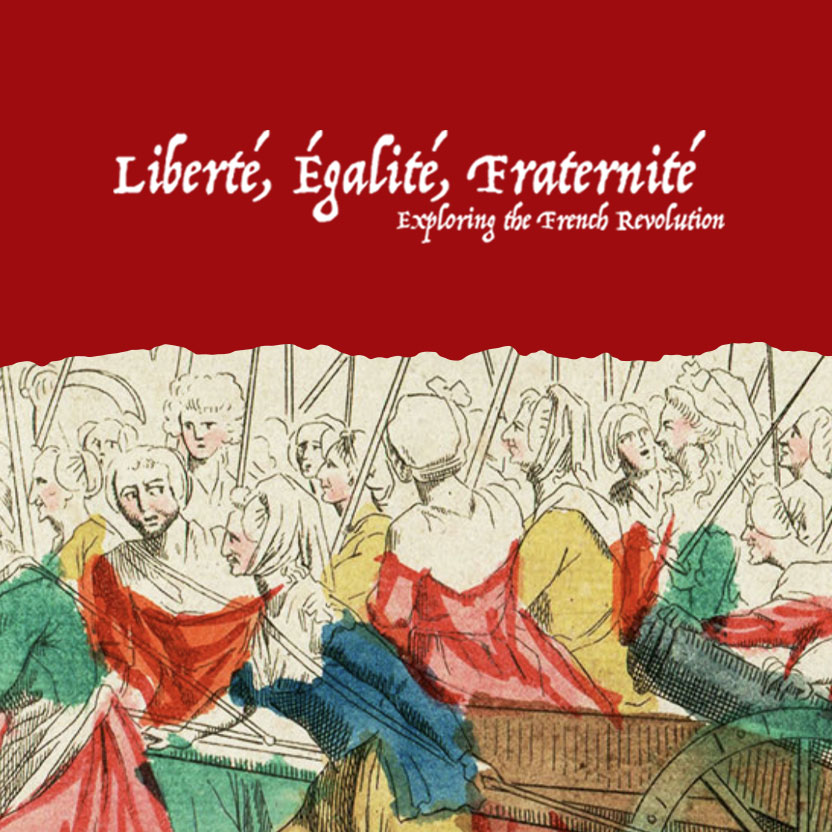
World History Matters, Liberty Equality and Fraternity, Women in World History and Valley of the Shadow

Filed under: chnm projects, jamesf — James @ 2:33 pm

World History Sources

Just a minor formatting issue, but the homepage does not fit entirely onto my screen, and there seems to be a great deal of empty space which could be used more effeciently.

This is a remarkable site. There is very little about which I can be critical. The scholarly reviews about the online primary sources alone is an incredible resource. Well organized and sorted by both geographic region, and chronology, I only wish I knew about this site during my undergrad degree! But there is so much more on this website. A guide to unpacking evidence from various types of sources, examples of historians analysing sources, and case studies on how 16 teachers have taught with primary sources. This an amazing resource for both teacher of history, and students, although perhaps below the university level, but then again, it is available to anyone, and that is one of the benefits of the internet. (more…)

October 2, 2006

What about blogs?

Filed under: Uncategorized, jamesf — James @ 9:20 am

In the introductory lecture to the course, Professor Kelly noted that Sarah Horton’s Web Teaching Guide was published in 2000 and remains the authority on the subject to this day. This I find astonishing given the speed of the development of internet technologies. Now, in fairness, I have read the book and do not know if the website www.webteachingguide.com has been kept up to date with current developments.

One of the developments which I feel if a glaring ommission is something rather near and dear to us, for we are required to post in it every week, blogs! On page 23 of the Guide there is a chart listing desired sample content of a course website, and under Comments column for the item Discussion it is written “Is there a way to post links and comments? Need to check with computing. Also, can students post things besides text, such as images or video?” While I understand that this is to represent a complete novice’s approach, it is important to consider all of the changes that have taken place over the past 6 years. The internet, through blogs, has become much more user friendly. Even people like myself, with approximately 20 minutes of education in writing HTML, are able to create pretty decent looking websites with the help of tools like Blogger. Additionally, blogs are able to post videos and images with the help of countless online hosting services. Videos can be hosted on websites such as www.youtube.com and images on websites such as www.photobucket.com, websites that will automatically create the HTML code for you so that all one needs to do is simply copy and paste the code into the text of one’s blog post.

There are a number of concerns raised in this book that I found are significantly out of date. Digital cameras are mentioned as being low resolution, and problematic when this is now no longer the case. Digital cameras compete with film so effectively now that Nikon has essentially abandoned the film camera market, producing now only two models of film SLR cameras. Additionally, concerns are raised in the book about excessive use of audio and video because “the majority of your students connect to the Web using slow modems” (84.) This is also no longer the case. When was the last time you surfed the web on a 56k modem? Granted high speed internet is not available in every single household, but in a university setting, high speed internet would seem to me to be the exception to the rule.

Now the fact that this book is out of date doesn’t detract from the important and valuable information with regards to structuring a website. But it does paint an inaccurate picture of the state of the technological development, giving a reader the mistaken impression that what they might want to do with their website is a lot more difficult than it actually is. An updated book I feel is needed. I liked this quote in the last few paragraphs of the book: “New technologies are constantly introduced that promise to revolutionize the way we do things on the Web. Those that can keep pace change the design and methods they use on their sites about every year. Those sites that are not regularly updated quickly become long in the tooth.” Condemned by her own words. If that statement is true, and design and site methods are revolutionized on a yearly basis, why hasn’t there been an updated version?

September 23, 2006

In the Digital Age

Filed under: Uncategorized, jamesf — James @ 10:38 am

I found this week’s reading particularly interesting mostly because of a personal connection I have to one of the articles. The author of the review of the “Who Killed William Robinson?” website is the head of the history department at the University of Guelph, and I took his course in Historical Methods which he mentions in the review and wrote a number of assignments using this particular website. I do apologize for the personal anecdote, but I do think that my experiences with this website might give some additional insight into the use of technology in teaching history from a student’s perspective.
I recall initially being confused with the instructions that were given for the assignment. In the syllabus that was given to us at the beginning of the class, we were told that we were to write a paper exploring the primary sources on the website, but that we were not supposed to determine who killed William Robinson. This was the case, but we were later given a paper that suggested theses for the paper were that William Robinson was killed by white settlers, black settlers, or natives. This was the cause of endless confusion among us students (at least my circle of friends in that class), and I cannot stress enough the importance of clear and concise instructions when assigning work on an online database. We had no idea exactly what we were doing, and only now after reading this review do I finally understand the purpose of the exercise – that primary sources are often incomplete, and difficult to work with. We certainly found them difficult to work with, and a group of us spent countless hours at the library, pouring over the documents, throwing out suggestions, shooting them down, starting again, tearing out hair, until we finally churned something out that we weren’t sure was what was expected. The assignment had very little feedback afterward, and we chocked up our confusion to the fact that professor Crowley might not have been terribly organized. I do not mean to be disparaging, but that was what we felt. If we had been given feedback afterward that summed up the point of the exercise, it might have taught us more than it did.
The lesson learned from this, I think, is that online exercises and websites like this, while they can be useful, should be used as an augmentation to classwork, rather than what seems like a diversionary exercise. While online sources, and databases are student-initiated learning, this does not mean that the professor necessarily remain in the background.
I do not mean any disrespect to Professor Crowley by this criticism. I very much enjoyed the rest of his Historical Methods class, and the other classes I took with him. If my remarks come off sounding rather disparaging, that is not the intent. My intention was to highlight a caveat regarding the use of online historical sites.
I really enjoyed the reading about the French Revolution website, and was particularly interested in the use of pictoral and musical sources. With regards to the latter, I think that this is where internet technology really shows its advantages. The use of music, I feel from personal experience, really makes the historical figures and period one is studying come alive. I feel that it could engage the students in ways not possible through textbook reading, and lectures. And the fact that it is online, and accessible at any time has distinct advantages over the professor playing a brief sound clip in the lecture.
With regarding to the use of pictorial sources, I thought this brought up a very interesting, and far-reaching question. In the case of the woodcut drawings from the Revolution, it was noted that because of the process of individual hand-colouring, no two woodcut prints were exactly the same. This led to the question, which one should be digitized, and therefore be considered representative? Now while the unique example of these Revolutionary woodcut drawings highlights this dillema particularly well, the question of which sources should be digitized is a valid one for all historical sources. In an ideal situation, every historical source would be digitized, but the scope of this project would be so vast that the completion of such a project would not be likely to be seen in our lifetimes. Moreover, with the current pace of technological development, it remains to be seen whether any effort to digitize sources could keep pace.
Digital sources are certainly much more convenient than digging through archives, or travelling to reading rooms of far-flung libraries. While I do not think that professional historians would ever question the need to research paper sources, I think there is cause for concern over the ramifications of digital sources for students. When confronted with the choice of researching in a library, versus online archives, I belief that the average student would probably opt for the latter approach. What sources are digitized, therefore, could have an impact on history students, for their interpretations of historical events would be formed on the analysis of a limited series of documents. The decision of which documents to digitize is one which should not be taken lightly, and all of the ramifications considered.

September 12, 2006

“The Amateur in the Operating Room” (Week 4)

Filed under: Uncategorized, jamesf — James @ 1:19 pm

This article, to me, read like an empassioned plea to history professors regarding the importance and the benefits of developing a proper scholarship of teaching and learning. I was particularly struck by the lack of any kind of formal training given to professors (although this is becoming a recurring theme in these course readings) summarized well on paragraph 6:

“Outside of this haphazardly shared folk wisdom, historians generally formed notions about teaching in isolation, and instructors were often totally ignorant of the pedagogical discoveries of colleagues teaching in the next classroom.”

Now, this was not the only time this lack of education in teaching practises has struck me. Most recently, I attended the information sessions for international students starting their graduate and post-graduate degrees here at Mason. During the presentations, they asked how many people had a teaching assistantship, and approximately half of that number raised their hand. We were then informed that there would be a two-hour information session given on a following day entitled “Preparing to Teach in a U.S. Classrom” which was put on by the Centre for Teaching Excellence. What didn’t strike me as odd then, and does now, was that this session was not considered mandatory – it was merely ’strongly suggested’ that we attend.

Only now am I somewhat appalled at how many people turned up for the seminar – about 20. This, out of perhaps 100 who raised their hands, saying that they would be teaching. (It should also be noted that about 5 of us at the seminar, myself included, did not have a TAship but were interested in one at some point during our degree). The format of this seminar was essentially just giving a breakdown of university policy for teaching staff (1 hour), and questions that any students might have about particular topics (1 hour). Now the majority of these students were going to be teaching in the sciences (engineering was well represented) and being unfamiliar with their teaching practises, I cannot fairly comment on their preparedness, but more than a few were not even sure what they would be teaching because they had not been informed. Although a few added hopefully that it would be a particular subject that was their area of expertise. I was a little shocked.

Now, noone else was a history student at this meeting, so I wasn’t able to get that particular perspective. But I am interested in the amount of preperation that history TAs receive. Are there any students in the class who can comment on this? How much time did you have to prepare for what you would be teaching? Did you lead seminars? Document analysis? Were you given detailed teaching guidelines or simply “haphazardly shared folk wisdom”?

With our discussions about the difficulty of teaching the Modern Western survey course, the question about the amount of preparation given to TAs is particularly pertinent. We have read the opinions of many who feel that the demands placed on professors teaching this course are enormous. And we have also learned the critical role that discussion and document analysis place in assisting the cultivation of effective historical thinking skills – the kind of skills which are learned in seminar, not in lecture. But yet, in a Modern Western survey course taught in 60 some-odd sections, the professor can’t be present in every single seminar. How then should the TAs be prepared to effectively lead and teaching a survey-course seminar? Is this ideal situation met all the time?

Certainly from my experience in my undergraduate degree at the University of Guelph it is not. I recall the discussions in my Modern Western survey course (entitled Europe in the Age of Expansion) as being a dreadfully dull, and unproductive waste of time. The leader (actually, quite a brilliant doctoral fellow, and specialist in British history) was utterly hopeless at stimulating discussion on the primary source readings we were given. We were given some questions to asnwer about the primary sources, and we would bring them to the class, and he would ask the questions. There would follow silence, and then one person would slowly raise their hand, read the answer they had written, whereupon the seminar leader would tick beside their name to show that they had participated, and then say “That was a good point – does anyone have anything else to say?” There would then follow another long period of silence, and we would move on to the next question. Only twice in the whole semester did a student comment on what another student had said, forming an almost proto-discussion. It was pitiful, truly.

Coming from such a negative background, with regards to Modern Western survey courses, I am curious to see how you, Professor Kelly, with your detailed understanding of teaching effective historical thinking, handle your TAs. What preparations do you give them? Do you ask them to submit lesson plans (or some reasonable facsimile) to you? Is it even possible to keep track of all that goes on within that micro-history department that is the Modern Western survey course? Personally, I find the enrollment in that course absolutely mind-boggling, and feel that you must have an uneviable position of responsibility in making sure all of these students get the best learning experience they can from that course.

James

“Making historical sense”

Filed under: Uncategorized, jamesf — James @ 9:45 am

After reading this chapter in the Stearns, Seixas and Wineburg book, I had some thoughts about historical thinking that might answer some of the questions that I had about how useful historical thinking is. In particular, the following passage inspired a great deal of thought:

…each day we awake to the morning news – whether by unfolding the paper or by pointing our browsers to www.cnn.com – calls us to be a historian. Or maybe we aren’t called. Maybe the only thing that accompanies the cacophony of modernity is the call to choose those messages that make us feel good about ourselves, our group, our faith, or our race. Perhaps this is the sole imperative of contemporary society, where the past emerges as a treasure trove available to us in building our identity. Heritage, like history, uses the past, but it makes no pretense of being self-critical…” (p. 311)

Here lies a tension – history versus heritage. This is important to note because Wineburg points that heritage tends to be conflated with history, and this forms part of the mechanism whereby individuals become historical beings, but historical beings who lack the self-critical nature of proper historical thinking. Now while historical beings created in this manner are often benign, Wineburg notes that the “sixteen- and seventeen-year-old adversaries lay waste to each other’s villages and shell each other into oblivion, they do so as historical beings.” (p. 307) I would venture to guess, that these ‘historical beings’, as with many other historical beings engaged in ethnic conflict, possess the ability to look at their own history self-critically.

I understand that the United States, and Canada probably will not have to deal with ethnic cleansing in their respective countries, but the tensions between heritage and history are felt. Professor Kelly mentioned the case of the Texan PhD student, adamantly believing that Texas was the only state to be an independent republic prior to becoming a state, later refusing to accept evidence that showed that indeed California and Vermont were also republics. Here is a case of the heritage vs. history tension, in this case heritage is materializing itself as nationalism. Nationalism creeps its way into history education through senate debates on the content of U.S. history curriculae, to debates over what should be shown in an Enola Gay exhibit. North of the border, the nationalist debate in Quebec is a good example as well. Quebec textbooks dealing with the Seven Years’ War (French and Indian War) have long been criticized for presenting a lop-sided account of the conflict. Although it may seem trivial, the motto of Quebec, which appears on all the license plates as well as well carved into the curiously titled Assemblee Nationale du Quebec (National Assembly of Quebec) is ‘Je me souviens’ – ‘I remember’. This of course begs the question, what do you remember? Is it the textbook accounts of Quebec history? Is it French heritage? Is it a balanced historical perspective of the rise and fall of New France, and the subsequent existence of a distinct dual culture under British rule? I’m guessing probably not the latter. I will end here, lest I go off on a rant on Quebec politics, but I feel that Wineburg brought up some very relevant points in this essay regarding the tensions between history and heritage, and the post-modern tendency to blur the two, very distinct things.

September 11, 2006

What history education means to you

Filed under: historical thinking, jamesf — James @ 3:46 pm

Throughout much of the reading, there is a common thread on the importance of historical education, and I was just curious as to what everyone in class personally felt is the value of historical education?

So much of the fight to revamp the curriculum around the turn-of-the-19th-century, as mentioned in the Orrill and Shapiro article, centered around trying to establish a case for the necessity of historical education. But I’d like to explore this topic a little further. What does history education mean to all of us? I think one of the most important aspects of it, and this was mentioned by Wineburg, is the critical thinking skills that historical scholarship cultivates in the student. These are the skills that leap outside the boundaries of historic thought, and are the skills that will stay with an individual long after they have forgotten what day Fort Sumpter was fired upon. But does is historical education the only system that imbues students with that skill? Philosophy, English, and even scientific inquiry I think also focus on the importance of critical analysis. Are the skills taught by history somehow unique? And if not, what then is left to defend the importance of history?

Here’s the dilemma I’m struggling with in my head: thinking critically is the most important element of historical education, and the largest facet of that is trying to break away from the presentism that steers us toward the familiar, or worse, steers us to misinterpreting the strange for the familiar. Now, an effective history education should assist the student in overcoming this obstacle – to be able to properly contextualize events, individuals, themes within a historical framework. But what now? How will that ability then be used by the student for the betterment of society? For being a better citizen?

If presentism is an incorrect approach to history, then so must the converse – the attempt to understand present-day situations by comparing them to historical events. The notion that we, as a society, can learn from past mistakes is based on the assumption on which presentism rests; that there is a certain degree of constancy thoughout history. If all this is true (and I’ll admit, in my ramblings I’ve made an awful lot of assumptions) then how can history be used in the creation of better citizens? Does simply knowing a countries history make one a better citizen, even if that knowledge may not be able to better inform one’s decisions in the present?

I’m very curious to hear the class’s thoughts on this, either on the blog or in the class. I do apologize for the rambling nature of my posts, which seem to resemble think-alouds!

James

August 29, 2006

An Introduction

Filed under: jamesf — James @ 9:31 pm

My name is James Feenstra, and I am beginning my Master’s degree in History here at Mason this fall. I was born and raised just outside of Toronto, Ontario, and graduated with a BA in History from the University of Guelph, Ontario with a year spent on exchange at the University of Strathclyde, Glasgow, Scotland. I am interested in reading scholarship on how effective various types of new media are as a means of teaching history. I hope that by the end of the semester I will be able to have a grasp on what are and what aren’t effective uses of new media, particularly in the museum field. I would like to be able to look more critically at how museum and historical sites have used new media, and whether this has been at the expense of the quality of historical education, or whether it provides an engaging, fuller account of the history being presented.

Powered by WordPress