« October 2005 | Main | December 2005 »

November 30, 2005

More on the law

Here is a link for a series of short articles about the legal issues of frames(yes, we already know they're a crime...sorry a bad pun, but I couldn't resist), images, and hyperlinking. The articles are a few years old so maybe the laws/legal reasoning has since changed, but they still provide an interesting alternative way to think about web design.
Amy

Posted by alechne1 at 08:13 PM | Comments (2)

Public History - Post Puerto Rico

Which of these sites most effectively conveys the past to a "general" audience? (And why?)

I have increasingly less patience with websites for casual surfing, therefore I’m trying to evaluate the following websites as the “general” public would, just searching for various bits of historical information. These are organized from #1 to #6, with #1 being the best historical presentation for a “general” audience, and #6 being the worst (Bon Appetit! Julia Child's Kitchen was a broken link on 11-29). I must admit, this task was more difficult than I expected, and the order I eventually settled on surprised even me.

1) Raid on Deerfield: The Many Stories of 1704 – Provides the most information in a relatively easy search method. It is structured like many of the educational websites developed by universities. However this site is hosted by a Museum, which gives it a good “connection-to-the-public” accessibility. It begins with a narrated video, much like many museums’ begin tours. Next is a description of the peoples of the area, followed by a timeline including descriptions of life for each of the five represented cultures. The site uses various graphics depicting the area and people, with rather detailed textual reading for further knowledge on the individual societies and artifacts. One is not required to do any of the further reading though, and navigation remains straightforward, similar to a brick-&-mortar museum. Maps and essays by historians provide even further information for the interested visitor. Plus the website hosts a detailed “Teacher’s Guide” for anyone wishing to use this for educational purposes. Overall the excellent, very museum-like organization and depth of research makes the site valuable to someone looking for any knowledge on the Deerfield raid or involved peoples. Navigation is clear and easy to use, allowing the user to garnish as much or as little information as desired.

2) The History Channel – Once you are past the homepage of this website there is a surprising amount of information, many general users would find helpful. This site emphasizes providing information to users on historical topics being referenced or discussed in popular culture and current media. Examples include “DaVinci Code,” Iraq, Alexander and others. This is definitely important for general users, many of which gain their historical knowledge through television, movies and news. For those who are curious on the accuracy of presented topics or simply want more, this website provides a less-biased presentation. Trivia-style history for particular dates is included. A World Timeline is easily navigated, showing many important dates/events. There are interactive maps of various regions during specific time periods. Teaching materials and programs are presented, addressing methods to bridge the gap between history and students’ misinterpretation of the subject. This website has quite a bit of value to a general audience, conveying background information on various topics.

3) HistoryWired: A Few of Our Favorite Things – It’s a good thing this site over-promotes the ‘experimental’ design being used, because a user would be somewhat disappointed if this were a more concrete structure. At first glance it looks like a county map of my home-state (Kansas), with variously sized and distributed squares/rectangles. After a bit more exploring a general user would actually be thrilled to find the images and information of so many unique artifacts the National Museum of American History cannot keep on physical display. The search function is also very useful as it illuminates all artifacts relating to a search term, without presentation of search-engine-like list. Information on an individual artifact opens in a separate window, allowing for easy navigation through many objects. Beyond searching by department, a user can search by sub-topic throughout the entire grid-map. Hence this website is useful for someone who wants a museum experience of varied artifacts relating to American History.

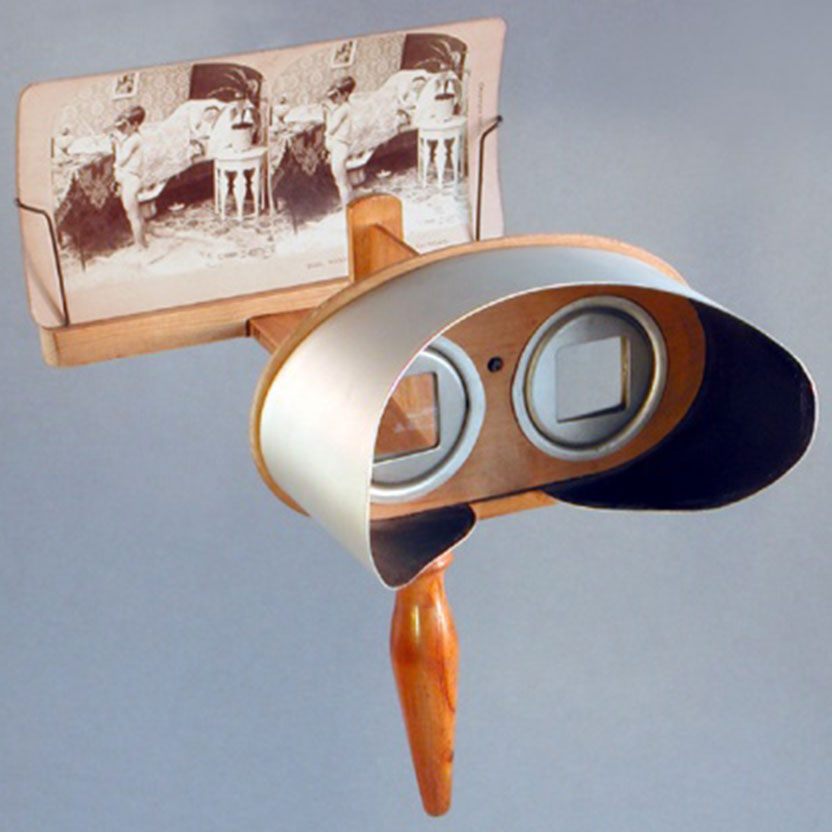
4) Devices of Wonder: From the World in a Box to Images on a Screen – This flashy website is useful to a general audience, but remains moderately annoying in the process. The directions on where to click are often wrong, or the icon mentioned simply doesn’t exist. The historical background on each item is relatively simple and helpful. With all the promotion of the graphics, it would be beneficial for these to work more efficiently. One would also appreciate the object and the information page to be displayed simultaneously instead of having to leave the graphic to read about it. The “Teaching Tools” are also quite in-depth and cater to a variety of specified age groups. This site seems to appeal to a younger audience, perhaps young elementary students. The benefits are its visual stimulation, accompanied by brief informational text.

5) Steve Dietz, “Telling Stories: Procedural Authorship and Extracting Meaning from Museum Databases” and John Vergo, “"Less Clicking, More Watching": Results from the User-Centered Design of a Multi-Institutional Web Site for Art and Culture” (delivered at the MW 2001) – Tied for YUCK. Ok, maybe these two are full of valuable information, but can we admit, boring to look at? Not to mention there are broken links swimming around for winner’s of the Web museum competitions. A general audience member would only consult this if they were looking for a specific website, or providing a list of museum sites to friends or colleagues. It’s the age of over-stimulation and these two just beg to be in print they’re so blah.

Posted by tgerhart at 02:08 PM

One million digital images at Library of Congress

from an email press release...

"The Library of Congress Prints & Photographs Division is celebrating a new landmark: one million images from its collections are now available in digital form online."

The millionth image, appropriately, suggests the wealth of insights the Division's collections offer about both historical subjects and the processes of making images. The photograph depicts Washington Senators baseball player Herman A. "Germany" Schaefer using a camera during a visit to play the New York Highlanders in April 1911. (The image can be seen
at:<http://hdl.loc.gov/loc.pnp/ggbain.09131>). It is from one of the Division's strong photojournalism collections, the George Grantham Bain Collection-an archive of more than 50,000 photographs from the first syndicated photo news service in the U.S. More than half of the images in that collection are now available online. (For more information on the Bain Collection, see <http://lcweb2.loc.gov/pp/ggbainhtml/ggbainabt.html>)

Digital images from the Prints & Photographs Division are available through the Prints & Photographs Online Catalog (PPOC)<http://www.loc.gov/rr/print/catalog.html>. The catalog provides access through group or item records to about 65% of the Division's holdings, a portion of which are accompanied by digital images. The records represent the variety of materials held in the nearly 14 million items in the Division's collections. In addition to photographs, these include fine and popular prints and drawings, posters, and architectural and engineering drawings. The collections are international in scope and are particularly rich in materials produced in, or documenting the history of, the United States and the lives, interests and achievements of the American people.

In addition to the growing pool of digitized images available through PPOC,recently added records make it possible to search several categories of material more comprehensively and to expand searches in new ways:


For information on new collections and recent and upcoming activities in the Prints and Photographs Division, see the division's "What's New"
page
<http://www.loc.gov/rr/print/whatsnew.html>.


Posted by nmartina at 10:52 AM

November 29, 2005

Volunteer list

Hi all:

Here is the list of those who have volunteered to go first with their final (15 minute) presentations. I'll update this entry as more people volunteer:

1. Nona
2. Amy
3. Meagan
4. Liz
5. Miles
6. Scott
7. Maureen
8. Matt

Posted by mills at 04:22 PM

Images and copyright

Hi:

This is a response to Tai's question about images for her wiki entry. This image comes from the American Memory project of the Library of Congress and is drawn from one of McKenney's books (published in 1859 and so out of copyright).

0001r.jpg


The LOC obtained it from the Filson Historical Society. Their rights and permissions listing on the LOC site says:

The Filson Historical Society owns the materials from its holdings presented online in The First American West. The Filson encourages the use of these materials for educational and scholarly purposes, but any use requires that a credit line be included with each citation.

Suggested Credit Line:
The Filson Historical Society.

The use of these materials in commercial publication projects requires the permission of the Filson Historical Society and is subject to a use fee. For permission to copy or use any materials from the Filson Historical Society in The First American West for any commercial purposes, please contact the society at the address given below.

Because I've just republished it in a blog that is clearly "educational", I'm well within their policy. But what about posting it into the Wikipedia? What do you think about that? One could argue that it is a non-commercial enterprise and so therefore within the policy. And, one could argue that because the image is from 1859 it is way out of copyright and so clear in any case. But one could also argue that some people, and they know who they are, use Wikipedia content in commercial enterprises. So, what if someone took Tai's entry, or just the image she might post, and used it for commercial purposes? Who's to blame there? And even if blame starts getting thrown around, can it stick to anyone, given that the image is from 1859?

Ain't copyright fun?

Posted by mills at 03:54 PM | Comments (1)

November 28, 2005

google

What do i find staring at me from my mailbox when i arrive home today. "The Chronicle Review" (The B section to the Chronicle of Higher Education) front page article entitled "The Google Gamble" by Siva Vaidhyanathan. It is the December 2nd Issue. You'll be able to access it through LexisNexis in a couple of days.

The article pretty much says that we are gambling that Google will keep the information free and egalitarian.

Posted by nmartina at 10:11 PM | Comments (6)

Matt's Wikipedia Entry

Sorry I missed you guys at Molly Malone's. I got Kurt's e-mail with the location, but it was a little late for me to drive from Fairfax. I also forgot that I had to pick up my dog from the boarder's this afternoon after work - he's been there since Thanksgiving, and I just couldn't leave him alone another night.

But to make good use of my time, I made my first Wikipedia entry.

Working within my theme for my project proposal, I checked out the Wikipedia entry for Degenerate Art, the English translation of the German Entartete Kunst. The entry is useful, if a bit scattered, and more focus could be placed in the actual Munich exhibition of 1937. I'll probably make those additions whiles procrastinating in Clio II next term.

I did complete the list of artists exhibited at the show. Prior to my edits, there were only a dozen artists listed. Using my resources, I completed the list with the name of every artist who had at least one work in the Entartete Kunst show.

Posted by mhobbs at 09:01 PM | Comments (1)

Miles's Wiki

I edited an existing article about Samuel Armstrong. You can read my edit at http://en.wikipedia.org/wiki/Samuel_C._Armstrong. I'll add some thoughts later, but now I have to rush to the meeting! See you soon.

Posted by miles at 03:29 PM

Wiki Tai

See my Wiki posting Thomas L. McKenney

I was actually shocked at how easy it was to contribute to Wiki. I have a great picture I wanted to upload of His Hotness - Mr. McKenney, but then I felt marginally guilty about the fact that it may or may not be legal for me to do so. I didn’t figure out the bulleting some of you used. Now I’m going to give a shout out to Ammon because you were my inspiration on the format of the posting.

Posted by tgerhart at 03:15 PM

Wikipedia

I have been working on a longer article about a black tanker who fought in World War II, but it's not quite finished yet. So instead, I inserted a portion of my writings into the article about Patton. Hopefully this one will draw some attention, as most of my other edits have been minor.

Posted by kalbers at 02:44 PM

Suzanne's Wiki Experience

Hi Everyone,

I'm looking forward to seeing everyone in Arlington in a few hours. I did it! I created an account for myself in Wikipedia, and I added to the Further Readings section of the Great Awakening entry in less than 30 minutes. There were only 3 or 4 readings, so you can see what I added at http://en.wikipedia.org/wiki/Great_Awakening#Further_reading/

I'v added a few thoughts about Wiki and the article in my entry

If technically challenged people such as myself can edit wiki, does that make it too easy? This goes hand in hand with the question, if anyone with any level of expertise can edit wiki, does that make it a reliable source? Certainly, the students out there are using it. Every teenager I polled (not too many yet) said they use wiki and trust its information. They understand that they too could add or edit wiki, but they trust that "people who know what they're talking about" are writing the entries.

The article brings out very good points, both pro and con, for this implicit trust placed in wiki. At any given time, students could look at dates for the French and Indian War and instead of the accurate date they could find the 'trick date' placed by a professional historian testing wiki. Or they could quickly find the accurate information they need and move on. They might even read more or click on links to learn more.

I agree with the idea that more professionals, historians, scientists, writers, etc. should consider adding or editing their area of expertise in wiki. I'm a teacher so I believe in sharing your knowledge with the world. I also think students should be taught to think critically about wiki and challenged to search for the accuracy of the information. Not many will on their own, but what a great object lesson to put inaccurate information along with accurate information and challenge students to decide which is which.

I've only used or visited the site a couple times before this assignment (another thing I've learned and become comfortable with on the web), but wiki is another example of the student's use of the web NOT going away. Teachers and professional historians can find ways to use it effectively or ignore it, but it's not going away. Given my lack of experience with wiki, I was really nervous with the idea of adding to or editing an entry, but thanks to Nona, I realized I could start small with contributing to the Further Readings section hopefully without rocking anybody's boat.

See you soon

Posted by scarson1 at 12:48 PM

Wiki Das Boot--Scott

OK, another new experience for this "old dog." Glad to know I can learn at least one new trick: U-550
http://en.wikipedia.org/wiki/Unterseeboot_550

After spending a couple of hours exploring the site and another hour figuring out how to edit pages and then how to create new pages, I did it! My Wiki account name is 1999screamingchicken

Had trouble navigating the site this weekend over my dial-up connection so I waited to post my entry until this morning and it's now up and running. I thought I'd better write about a subject that I am more than just familiar with and what better than U-boats! I've written a number of articles on U-boats that the Coast Guard sank and after checking the entries I noticed that no one had written anything about the U-550. First I edited the page on the U-863 which we are currently working on at the office since it was recently discovered in a place that no U-boat wreck was supposed to be. Writing the entry was fairly easy, I just condensed an article I had written. Would have kept it more simple but the "how to" section under FAQs suggested that a few paragraphs are better than just one, so what the heck. I linked it to the "List of U-boats" page where I hope it will get noticed. I'll add more links this afternoon and maybe even post a photograph. Overall it was fairly easy to work with once I figured out how to move through all the different processes one could take to publish a new page. Reading directions did help; started with the "Help:Starting a new page" page at http://en.wikipedia.org/wiki/Help:Starting_a_new_page and went from there. Not sure on the translations though, does Wiki use a special language? There was a section on converting Word docs and HTML too. Hmmm, that will take some more research on my part. Overall a fairly rewarding experience. It hasn't been up long enough for me to judge what kind of responses I've received but as soon as I do I'll add them to the blog.

OK, it's now been up for over 24 hours and no one else has edited it in any way; after reading Rosenzweig's article I expected to get jumped on by all of the U-boat nuts that are out there. Could it be that I wrote the perfect entry?? Naah.

Thursday, 1 December in the a.m. and no one has added anything or edited my piece. Guess it wasn't too bad. Re-read Roy's article again, he really did a balanced job I thought. Interesting to think that it took a multi-millionaire to get Wiki started. He did not, in my opinion, create a Frankenstein. How do you define history? However you answer that question will show what you think of Wiki.

As I read Roy's article the first time I realized that most of the material we've read in this class relates to the academic historian and how his/her ability to teach will be affected by the web; public historians don't seem to be wringing their hands with worry over this whole issue. Students today live on-line; get over it. Wiki, I thought, once again, would make a good starting point in anyone's research. As he noted, the entries got the facts "right." Move on to more in-depth research from there. My Wiki entry gives a good overview over the "history" of the U-550 but is nothing close to the final word. Also, Wiki's weird, but perhaps necessary caveat of not allowing original research or polemics in the entries definetly limits its usefulness to academic-professional historians. But so what? Should academic-professional historian's contribute? Why not--individual choice.

What I see here is "history" moving into the marketplace -- and it really makes the academics nervous, but the public historians aren't so worried. Why? We live in the marketplace well away from an ivory tower. Being a Fed though is something of a cushion but even we are subject to the "political market." For example, cutting the size of the federal workforce under Clinton affected most Federal historians.

Whatever we, as students or professional historians, believe doesn't really matter. The market, that dreaded fact of life, will ultimately decide what happens with Wiki. Look what happened with open-source Linux, any inroads to Microsoft's market share?

Love the comment by the Ph.D. student who writes for Wiki, he does it to improve his skills in writing to a general audience. Good attitude.

Posted by sprice7 at 12:01 PM

Wiki - Ammon

I started out not quite knowing what to do. So in true hypertext fashion, I bounced around from link to link until I found a link to a person with no entry. I created a brand new entry for that person. It's not much, information wise.

Karl G. Maeser

Posted by ashephe1 at 11:17 AM

Liz on Wiki

Seeing how the Bears are atop the NFC North (yay!), I decided to do some research on Chicago football teams, past and present.

The history of the Chicago Tigers was a bit too brief. I added the roster, end-of-season stats, and the list of teams of that season (adding the links). There is little on the American Professional Football Association.

The table was the worst part--the stats kept going in the wrong columns. I eventually fixed it.

Posted by ejonese at 08:06 AM | Comments (1)

Maureen's Comments on Wikipedia:

Maureen’s Comments on Wikipedia:

Somewhere along the line I missed out on Wikipedia and this week’s project was a unique experience. It was fun to re-edit the links about the Woking mosque’s connection to the Begum(s) of Bhopal and I found it an extremely easy process to add to the original entries. If I can do this, ANYONE can. And, once I realized how easy it was, I had equally interesting time thinking about how Wikipedia has created a site that could be both the worst and the best thing for teachers who want their students to seek out and research primary sources.

History and art history teachers expect their students to do their own research and to use primary sources. Obviously, as Roy Rosenzweig notes, this is not going to happen on the Wikipedia site and we need to consider how that challenges conventional historical research. In one of our earlier readings, Vernon Takeshita expressed his concerns about how consistent use of the Internet would “undermine…analytical thinking” of young students who do not seek out primary sources.

Takeshita’s ‘Web-phobia’ has been thoroughly challenged in our class discussions and through our continuing examination of, and research into, digital scholarship. Obviously, the Internet does provide web sites that challenge and educate students in history as well as in other academic pursuits. As we have clearly seen, sites like “Who Killed Willie Robertson” create opportunities for students to use primary source documents as evidence in order to try to solve problems.

However, Wikipedia does not provide primary source documents and, instead, it becomes a site of what Rosenzweig calls “reasonably accurate accounts” of important people, places and things. Is ‘reasonably accurate’ a good enough source? According to Rosenzweig, Wikipedia does a more than adequate job of providing accurate information. In fact, he argues that it is ‘surprisingly reliable’ in its American biographies. Thus, it could be an easily accessible site for students to do a quick paper on an artist without reading a biography or looking at works of art in order to understand that artist’s legacy. This could be a problem but the beauty of Wikipedia is that it also provides an incredible teaching tool for teachers and students.

The site’s ability to allow anyone to edit entries or to write new ones provides an opportunity for students to add on to existing entries on famous people, places or things, or to write an entirely new entry. And, in order to do either of these, students will have to have some knowledge in order to write an entry that will be retained on the site. Thus, it becomes possible for teachers to use Wikipedia as a scholarly site. Students can look for the ‘amateurish’ sites that need to improved upon or follow their own interests and create a new entry or edit an existing one. However, students would need to learn how to research, hopefully with primary sources documents, in order to create an entry that would stand the test of time, peer review by others.

Since the Web is not going to disappear, we need to make sure that what we do have and what students are using on the Web can be used to their advantage in learning as well as to our advantage in teaching. Wikipedia is a site that provides some interesting ways to make students think about history and how it is written and we need to use it to their advantage as well as ours.


Posted by mguignon at 12:07 AM | Comments (2)

November 27, 2005

amanda's wiki wacky

I have no problem with Wikipedia as a possible source. I check each source I use from the web for authenticity anyhow. I think it would be a problem for users with no research experience who take for granted everything that is posted. While I think the provider of the info should try to be certain what they post is accurate, at some point it is the vistor has to take responsibility for authenticating the information. It was fun trying to find a subject that had not been covered. I was surprised at how well some of the entries were written and cited.
I wrote about Gottfried Lindauer, a New Zealand artist who had rocked my world since I was a little kid. We lived in New Zealand for a while when I was small and Dad was building ships. It was easy to write about because I am so excited about his work. I am also interested and excited about Maori history, a lot of which I learned from studying the paintings. Lindauer is an important artist for the Maori and the history of New Zealand, so I was surprised that he wasn't already covered.
The Wiki format was pretty easy after learning this blog thing so away I went. I tried to present a "reasonable accurate account" as Roy would put it, of Lindauer and the thrust of his paintings.
I was even able to link some websites so people can see the artwork I am referring to. (that's amazing for me, an internet neophyte) I think art is one of the most important things in human life. It is one of the only things that truly seperates us from animals. see some beautiful art and let me know what you think of my entry @ http://en.wikipedia.org/wiki/Gottfried_Lindauer
here's some helpful visual links
http://www.aucklandartgallery.govt.nz/aboutus/history/collections.asp?show=Partridge
http://www.digitalus.co.nz/mokomokai/lindauer.html

Posted by avonargy at 09:39 PM | Comments (3)

Wiki Slanguage

I searched Wikipedia's "article request" for a topic I might know something about and found a request for "see a man about a horse." Having done some research in Slang (and making a digital project on it), I figured this was something I could do:

See A Man About a Horse

P.S. I really dislike Wiki's coding system.

Posted by mhess3 at 09:20 PM | Comments (1)

Debbie's Wiki edit on James Armistead Lafayette

My wiki edit is on James Armistead Lafayette. I was going to do a couple of others but this took hours by the time I checked my research and figured out how to make external links. The links still don't look great but they work and at least the information is accurate and I was able to add a redirect for James Armistead Lafayette to James Armistead. I think if the editing process was easier the quality of entries would hopefully improve. See you all tomorrow. Debbie

Posted by dschaef1 at 08:42 PM

Maureen's Wikipedia Entry:

I edited two Wikipedia entries; one on Woking (England) and the other on Sultan Shah Jehan, Begum of Bhopal. My entries clarified that:

Shah Jehan was the Begum of Bhopal from 1868 to 1901 and she commissioned the Mosque in Woking, England. She was one of four female Muslim rulers in Bhopal who reigned for over a century between 1819 to 1926.

See:http://en.wikipedia.org/wiki/Sultan_Shah_Jahan%2C_Begum_of_Bhopal

http://en.wikipedia.org/wiki/Woking

Posted by mguignon at 07:49 PM

Suzanne's Thoughts on Teaching and Learning

With this entry, I am finally caught up with my blogging. I reread your other blogs on digital classroom, and it looks like we could have a couple discussions on the topic. I found a lot of good insights that spur my thinking further. I had to stop contemplating and write the blog, so here it is...

I’ve been thinking a lot about the effect of digital media on the classroom as we know it. After our class discussion, I posed the ideas we bantered about with friends of mine that are presently college and high school teachers. The jury is still out, I think, because it poses a shift in their paradigm that they have to think about for a good while. In high school, accessibility to computing at home can be an issue, but I think it’s a reluctance to change themselves. I’ve been going to High School Open Houses meeting my sons’ teachers for six years now. Gradually over time, I noticed that even the most reluctant, technically challenged teacher has email, posted their syllabus and the student’s grades, and more and more utilize the Blackboard system. It is difficult for the working teacher, secondary or college level, to embrace new technologies. Their lives are busy enough staying current with lesson plans and grading. Having said all of that, I think the emergence of new media in the classroom is inevitable. The wide use of the Internet combined with the digital savvy young generation is something that teachers and administrators cannot ignore. Teachers who find it difficult to change their paradigm will be left behind by their students. I think back to the Takeshita article and my response is “the internet is here to stay, so why don’t we teach our students to use it intelligently instead of ignoring it.” This is pretty heady stuff from someone of my limited abilities. I speak for myself when I say I think I’ve learned more from Clio Wired than my technically savvy classmates. I still can’t DO the stuff you all can do, but my web worldview has been greatly expanded. I learned early on that teaching is my passion (whether I get paid to do it or not), and I funnel all this information into ways to become a better teacher.

Our discussion centered more on the scholarship aspect of teaching and learning, and, at this point in the profession of teaching history, I understand the importance of this concentration. College professors have not been traditionally trained in teaching methods the same way a secondary teacher is required to be. Effective teaching cannot be analyzed or measured without the reciprocal look as effective learning. Mills’ quest to determine the effectiveness of using digital media to teach and learn will go a long way (hopefully) to move the scholarship of teaching with new media along its inevitable path. The student’s are using the internet, and they are not going to change. I agree with David Pace’s article that the type of thinking we historians and teachers are requiring of student’s is not natural or easy for them. It is as important to understand how student’s learn as it is to understand how to teach them to think at higher, more analytical levels. The expanse of the internet will need to shape that teaching process as the articles pointed out how student’s will form their own meta-narrative because they are not being led by the nose along a path to discovery. The challenge to teachers is how to keep them inside the ballpark of the intended assignment as they wander off the path to self-discovery.

The discussion about the art of teaching and learning is ongoing, and the introduction of new media can only expand it. One other aspect I want to mention in this blog, because it has me thinking differently, is the point that the teaching of history should reflect the thinking processes of the professional historian. Chemistry courses make you do the experiment and write up labs similar to a working chemist, and law students definitely imitate the work of a professional attorney. Why not teach introductory history students to analyze and think like the historian? I have personally only taught up through middle school, but I have helped my high school and college age children with their AP History courses. And I just started TAing for HIST 120 this semester. I am immersed in the grading of a college level survey course with 180 tests to grade three times this semester. My professor uses the lecture approach, but his lectures are thoughtful and provide the current thoughts on the history profession to these students. His essay questions are a series of questions designed to make the students thinks analytically about the information they have absorbed. As you would expect, the majority of essays are what Pace calls “lists, series of lists, and causal lists,” but periodically, a refreshingly well written essay passes me by. They are learning, and are some able to articulate what they are learning at that higher level of thinking teachers long to see.

My understanding of the use of new media in the classroom has certainly changed, and I consider this a challenge to learn how to use and incorporate new media in any future teaching I do. I would have agreed with Takeshita a couple years ago, but my experiences with my children coupled with my own experiences at Mason lead me to believe that the digital age is here to stay. I’ve got to get on the bandwagon or be left behind. I look forward to pondering this further with my friends and teaching colleagues.

Posted by scarson1 at 12:57 PM

November 26, 2005

Suzanne's Proposed Proposal

Happy Turkey Day! Thanksgiving has provided me the time to catch up on my missing blogs. I've been working on my proposal about the Great Awakening for awhile, but I've put the pieces together and here it is. Read on...

By definition, the Puritans in early colonial America, were dissenters who “vote with their feet” when they disagreed with church doctrine, policy, or politics. The Puritan/dissenters who left the Massachusetts Bay Colony and landed in Connecticut showed their propensity towards leaving one church community and establishing their own church early on. Strong opinions about the way to live a Godly life prevailed in colonial America. Judgmental attitudes and actions about this proper way of living guided the colonists throughout the seventeenth century. In particular, the Puritans had a difficult time reconciling their attitudes towards Godly gain in the form of wealth and social status against the sins of pride and avarice. The original colonists were able to resolve the doctrine of the elect within their community, thus forming an acceptable spiritual hierarchy. For future generations, the way of the Godly was not as clear to the children and grandchildren of the original saints. Controversy arose when they stood for baptism. The tension between the saints’ desire to accept their offspring into the Kingdom of Heaven, and the less than strict behavior of those offspring simmered in the colonies for decades.

The Great Awakening, in the first half of the eighteenth century, shook the norms created by the Puritan doctrine. Richard L. Bushman examines the effect of the Awakening in the colony of Connecticut in his book, From Puritan to Yankee. Early in 1721, an extraordinary number of conversions occurred in Windsor, Windham, and Norwich. Religious fervor spread across the Connecticut Valley eastward from the river throughout the towns and back country. Ministers like Jonathan Edwards, the Tennent brothers, and George Whitefield saw people flocking to hear their message of faith and the path to salvation. The Awakening affected people of all classes and all walks of life. Not everyone was pleased with the religious fervor stirred in their communities. Some towns banned the itinerant preachers, and local pastors sought to maintain the status quo.

In the process, the Awakening divided the religious community and caused schisms in congregations throughout the colonies. The American religious community permanently split into two camps: the evangelical “New Lights” known for their new access to divine truth through a conversion experience; and the orthodox “Old Lights” clinging to their inherited doctrines of election. The Connecticut Valley was particularly affected by the controversy, and many congregations engaged in debate and eventually split apart.

My web project proposes to combine my interest in religious history with my commitment to provide secondary level educators with the resources to teach interesting and engaging history. The future of new media may be open to debate, but the use of the Internet in secondary classrooms needs to be expanded right now. I propose to create a website as a resource to teach about the ripple effects of the Great Awakening on individual communities. I plan on designing a micro-history site about the Connecticut town of Norwich, and the effect of the revivals on the congregation and community. The website and its links will further the argument that the Great Awakening brought about church schisms and community unrest in the late colonial period.

The website will examine Norwich over the time period of the revivals. A series of interactive maps of the town will show the churches, the town hall, and residences of preachers, government officials, and leading citizens. Available church records, town records, published sermons, and census information will be displayed to show the brewing controversy caused by the revivals and itinerant preachers. The pro-revival and anti-revival factions will be mapped, and any changes in church congregations and church buildings will be noted on the maps. A database of people in the form of the Corporate Board Table at theyrule.net will show the relationship between church members and kinship networks. The website will be snapshots of Norwich before, during, and after the revivals swept through their community.

Posted by scarson1 at 09:23 PM

Woopsies, forgot

Guess who forgot to post my homework before I went on the honeymoon? Yes, that’s Tai.

Digital media MAY change the teaching and learning of history:

Teaching

Certainly digital media changes the power structure of teachers traditionally ruling over students. Similarly, students have more control over their method of learning and viewing sources. If using digital source material, students have a level of autonomy never before provided by printed texts. Students can access, view and analyze a range of sources even beyond the Internet-prolific professor’s capability. As stated by T. Mills Kelly, “[a]n intricately interlinked set of primary source documents makes it possible for students to construct or reconstruct their own meta-text in ways that an assignment in print alone, no matter how well designed, cannot, except for the most gifted or motivated learners.” Thus, both professors and students are embarking on an educational adventure because the digital media prevents the teacher from having complete control over probable learning outcomes.

Yet beyond being outsmarted, instructors more often fear, as Kelly argues, “the web discourages our students from using the library, or even books at all.” However, this is addressed by what an instructor’s course goals include: Does the educator not wish to provide the student with historiographical context and background for what is being studied? Historiography must be addressed in print, in libraries and hence, through books. It would be irresponsible in any sense for a professor to instruct students, even with digital primary sources, without providing the students a foundation of previously purported knowledge.

Perhaps the question should not be what changes digital media has on teaching. Rather, the emphasis should be, what are the goals of history educators? Hopefully it isn’t, and never was: regurgitation of facts. Whether primary sources were provided in hardcopy or through digital media, analysis should be independent and unpredictable, with students being instructed on the historiographical background of a particular topic.

Learning

Just as we do not consider primary sources without a historiographical context, we should not consider students outside of their cohort context. Example cohorts: survey course students, history-major students and graduate history students. Professors teaching various courses should have varying goals for these diverse cohorts. Survey courses should be working to provide a general background while combating what David Pace calls the “ideological spin” primary and secondary schools give to history, “overwhelmed by creations of popular culture, such as Forrest Gump and even Bill and Ted's Excellent Adventure.” With digital media, instructors can utilize similarly visually enduring relations of history with more historical viability than box-office productions. History-major courses should be introducing students to primary sources and developing analysis with historiographical framework. Kelly indicates how digital media aides in this, “web certainly encourages students to focus on primary sources, especially what they mean and how they relate to one another, rather than simply memorizing some fact about them.” Graduate students can then use a wealth of digital and print materials to analyze and create new theories within an extensive historiography for further understanding of a particular historical topic.

A dilemma results for all cohorts, as Kelly reveals, because “student satisfaction is not the same thing as student learning, but such resounding endorsements are difficult to ignore altogether.” Students today are accustomed to using the Internet for both leisure and learning. Therefore it was inevitable historians would begin to use the digital media to enhance their own profession, which has in turn benefited students; “exploring on the web does seem to encourage original thinking about the past, thereby helping students to make more sophisticated connections between various sources, events and people than they generally do with a textbook or monograph (Kelly).” With this, the teaching of history appears to be improved by digital media. Nevertheless, students “not only do not know how to judge the quality of what they find on the web, they do not even think much about the potential risks of bogus, or simply sloppy, websites (Kelly).” Just as with printed texts, instructors again need to provide either instruction on how to evaluate history websites, or need to provide previously screened Internet resources. Fortunately, organizations such as the Center for History and New Media here at GMU are doing such screenings for other instructors to identify worthwhile Internet sources, thus eliminating the need for professors to fear the breadth of inaccurate knowledge and primary sources littering the web. [Western Civ Webography, World History Matters]

Needless to say, digital media has definitely changed the availability and accessibility of sources for instructors and students. Although the teacher may be giving up some of the control in the “right-answer compromise,” the students are gaining a level of autonomy in their learning, which cannot be accomplished in traditional printed texts. The goals of teaching should have been and thus should remain centered on (when relevant to the cohort) developing a historiographical background allowing students to evaluate primary sources for new and unique conclusions. As stated above, the use of digital media allows students in this process to make original deductions about a range of primary sources, previously impossible – meaning digital media has changed the teaching and learning of history.

Posted by tgerhart at 03:22 PM

November 25, 2005

nona's wiki response and post

Response to article:
The article set out to answer quite a few questions. The ones I was most interested in reading the answer too were:

I agree with the author that the “less sophisticated reader” may not know the difference between an ill-informed amateurish article and a polished one.(18)
There is where I think the danger lies. If that same less sophisticated reader went to Encarta with its same propensity for errors and wooden text, they would not happen across that amateur ill informed article. Just a thought, I do not condemn the whole venture because of that concern.
I also agree with his assessment of encyclopedic entries. Anytime any encyclopedic entry that serves as one's sole source, it is not a good thing (22). But Wikipedia can not be blamed because it belongs to this category of reference material.

I was not aware of the discussion page that accompanies each entry. I agree with the author that it is in the line of collaboration and peer review.

I tentatively disagree with the author’s tentative statement that historian’s probably have a professional obligation to make Wikipedia as good as possible.(25) I think that no such obligation exists. That said, when I come across articles on subjects that I am interested in or that are in my area of expertise, I will probably read them very carefully and edit accordingly and in that aspect I will be very much like any other Wikipedia user. I will also, as a teacher, instruct my students that like any other encyclopedic source, this may be only a starting point for their research and corroboration and verification is expected. That I feel is the extent of my obligation to Wikipedia.

Wikipedia Edit:
I added to the entry on the Bahamas a section called: Bahamian History Resources.

Posted by nmartina at 05:08 PM

November 23, 2005

Amy's Wiki article response

Here are some of my initial thoughts on Wiki and our Wiki reading before the holiday (and the sleeping pill known as turkey!!) set in. To anyone on the blog before/during the holiday, Happy Thanksgiving!! Amy

I must admit: I just don’t “get” Wikipedia. I understand that it’s an online, user-edited encyclopedia and all that, I just do not understand the allure, or why someone would spend six hours a day writing articles for it (as the art historian from the article did). As such, I do not understand how Wikipedia is blooming the way it is. I am either out of the loop, not with the times, etc. or Wikipedia really is not representing such a wide body of users as it could be thought to be.

Though the article did not set out to explain the “why” question, I was able to draw a few reasons, none of which surprised me. As we have discussed in class, the free stuff quotient is high with Wiki and it’s a perfect tool for free and easy access to information (and some additions and corrections if you have them). This, though, does not explain the 52% of edits that are produced by the users who make 100+ edits per month (p. 20). Perhaps these kinds of figures can be explained by the fact that people want to make their work public and/or contribute to public Internet community. However, the above figure and others like it point to a commitment to these practices rather than a passing interest in “the new thing.” I don’t find this medium of digital history particularly threatening, I just must be missing something.

More to the point of Wiki and historical scholarship, however, I find the idea of Wiki as “the first draft of history” (p. 20) quite an intriguing one. Beyond the writing allusions, I think we could see in Wiki trends of historical interest from outside the world of the university; ideas that could indeed lead to the formation of new fields of interdisciplinary study. Wiki lends itself particularly well to interdisciplinary study by encouraging (though the technology of linking) relationships across seemingly unrelated topics. A Wiki user’s lack of “a command of the scholarly literature, [and] persuasive analysis and interpretations…” (p. 15) may be helpful in pointing out fresh ways to study various topics (an “organic intellectual” perhaps?)

Or not. Or the bland and/or disjointed Wiki prose could disguise any creative approach, leaving Wiki a collection of random, colorful facts. Given the growth of Wiki thus far, Wiki and the state of digital historical scholarship via Wiki in the future are uncertain. For my part at least, maybe I can finally make some sense of it to determine its appeal and then report back.

Posted by alechne1 at 08:45 PM

History to go?

From our discussion on Monday, I ended up writing something in my blog on History to go. I'll be interested in your reaction to this.

Have a great break and I'll see you in Arlington on Monday.

Posted by mills at 11:20 AM

November 22, 2005

I edited an entry on...what else? Underwater Archaeology

I was fairly surprised by how poorly the maritime archaeology section was written. I didn't rewrite the whole thing(though some day I might in all my spare time)but just corrected a couple of factual errors regarding how underwater sites are different from land sites.

They only listed two, one of which was inaccurate. So I just corrected the one and because of that change added a third. There is a lot more of course that could be written but I thought this would do for now.

First they suggested that underwater sites had two "advantages" over land sites in that organic materials such as wood or leather could be better preserved. Second they said that because shipwrecks have been out of reach until relatively recently this made them time capsules.

My input was to change "advantages" to "differences" because the same process can also cause faster deterioration or organic materials. Organisms such as the toredo worm found in salt water environments quickly eat wood fibers and often result in the complete destruction of any wood exposed not buried in bottom sediments. The second change deals with the time capsule comment. Inaccessibility does not make a wreck a time capsule. It does, or did until the advent of scuba gear, help preserve wrecks from looting. I then added a third difference by describing that shipwrecks are often described as time capsules because the wrecking event is a frozen moment of time (hence a time capsule) unlike a land site which more often represents a slow accumulation of debris over a period of years.

Actually their whole breakdown of differences between Maritime, Underwater, and Nautical archaeology is a bit confused but fixing that is a much larger project. For now let me just say that maritime and nautical archaeology don't necessarily have to take place underwater while not all underwater archaeology involves shipwrecks or even maritime activities.

Creating an account was easy and clicking on the "edit this page" tab made the process pretty quick. If you want to see the changes go to this page: http://en.wikipedia.org/wiki/Maritime_archaeology
My user name is Muak.

Posted by kknoerl at 08:33 PM

World Digital Library?

In case you didn't see Librarian of Congress James Billington's op ed piece in the Washington Post today, he announces a big initiative to create a World Digital Library in which the great works of print are digitized. Guess who's helping to pay for it? Google did you say? Give the lucky lady a prize!

The column begins:

Digitized, instant communication is the great technological revolution of our time. It has streamlined business and delivered more information more quickly to more people than ever. And it has accelerated basic and applied research. Both the problems and the researchers who work on them are scattered around the world, but they come together in a common focus on the Internet...

Later he argues:

Libraries are inherently islands of freedom and antidotes to fanaticism. They are temples of pluralism where books that contradict one another stand peacefully side by side just as intellectual antagonists work peacefully next to each other in reading rooms. It is legitimate and in our nation's interest that the new technology be used internationally, both by the private sector to promote economic enterprise and by the public sector to promote democratic institutions. But it is also necessary that America have a more inclusive foreign cultural policy -- and not just to blunt charges that we are insensitive cultural imperialists. We have an opportunity and an obligation to form a private-public partnership to use this new technology to celebrate the cultural variety of the world.

Through a World Digital Library, the rich store of the world's culture could be provided in a form more universally accessible than ever before. An American partnership in promoting such a project for UNESCO would show how we are helping other people recover distinctive elements of their cultures through a shared enterprise that may also help them discover more about the experience of our own and other free cultures.

Somehow creating a World Digital Library turned into an instrument of foreign policy. It's an interesting leap but not one I'm sure I follow. Part of the problem for people like Billington is that big initiatives like this one need to be "policy relevant" if they are going to be sold successfully on Capitol Hill. It's a shame that he can't just make the argument on its merits. I suppose the good news is the the digital capabilities of the Big Library will be used now to begin bringing together similar initiatives on a global scale.

Posted by mills at 07:34 PM | Comments (2)

Amy's Wiki Entry

I tried posting this Wiki entry on the blog last night but I don't see it so I'll try using a different category. Here it is again so if we end up with two, my apologies.

I've never used Wiki before so I started simple. Look for user name akl483 for following added publication to the entry for Victoria Clafin Woodhull:

Woodhull, Victoria C. Martin. The Rapid Multiplication of the Unfit. New York, 1891.

Perhaps if I become more adventurous I will write about her views on eugenics that are set forth in the above publication.

Posted by alechne1 at 08:57 AM

November 21, 2005

deerfield beats all

Amanda von Argyriadis
November 21, 2005

I think of all the sites we looked at that the Deerfield site was the most effective history site in a number of ways. The interface was not only sophisticated but elegant in its arrangement. There is a lot of historical information on this site, and the visitor can choose how deep they wish to go by continuing to click on the subjects until the site dead ends. Deerfield was clearly organised and seemed to flow well, with the result being more readily understood and retained batch of information than the “Who Killed Robinson?” site we looked at last week, for example. I think the Deerfield site reaches the broadest audience, with the least amount of user complications. Even with dial up it ran well, although the opening film clips available were slow to load, but not as bad as some of the other sites. Makes me wonder if it is different technology used to create those films that makes the difference as to whether I can load them easily or not. If so why wouldn’t all programmers use the software that serves the most people?

The Deerfield site makes the best use of modern technical media advances with access to music, film clips and some pretty cool technology they call “rollover”. The illustrations of each scenario invite you to roll the mouse over the scene and read something about the subject you’re resting on as they are highlighted in red. Some subjects offer further explanation that pops up in another window and within those there is even more opportunity for links to related subjects and more illustrations. The writing is clear and easily understood though not patronising. The information seems reasonably reliable, and if covering both sides of an argument is in question; five sides are covered just to be sure. I don’t think this site was intended for children, but it does have a teaching page aimed at instructors who would like to use it in the classroom; I think eight or ninth grade would get the most out of it. I think the Deerfield site wins hands down for conveying the most info to the largest audience. It also uses new media to the best advantage and has the best interface. Gee, think I’m too firmly decided? Take a look at the competition:
The History Wired Site from Smithsonian was simply too cluttered to really gain much “history” from. The control panels don’t really help you go anywhere or do much of anything interesting like the Deerfield site does. And again there is too much information without any real overview, other than a timeline that spans so far that it is difficult to get your brain around. Perhaps repeated visits would make this interface more useful as you get used to how it is arranged and how to manipulate it, but with just an hour, it doesn’t impress me as a good history site. It certainly doesn’t tell a story like Deerfield and pull the visitor in with decent writing.
The Devices of Wonder site left me stone cold. It took forever for the initial page to load and that made me frustrated. It doesn’t convey much historic information at all, although the images are fun to play with. As a dial up user, I would have to wait until my next birthday to load the film clips, so they were of no use to me and I would imagine no use to anyone else with this service. While I’m probably not in the majority here, it still is a factor. I’m pressed to tell you what the point of this site is.
Finally, I liked the idea of the Julia Child site but it doesn’t strike me as scholarly history. It’s a fun, well designed site, and I’m a huge fan, but I don’t know if it’s history. Comments welcome.

Posted by avonargy at 11:43 PM

Public History - Ammon

I must say I was fascinated by two of the websites because of their use of Flash and Javascript (Bon Appetit! Julia Child's Kitchen and HistoryWired: A Few of Our Favorite Things). My argument is that these two sites make the most effective use of new media. If I have to pick one of these two for the ultra super top... then I'll have to go with HistoryWired.

Why, you may ask, does HistoryWired beat Julia Child's Kitchen? Well, don't ask. I just picked one. But I will tell you why and how I feel HistoryWired uses new media most effectively. So here it goes... HistoryWired is like the ultimate time line. What I really liked was the interactivity with the time line, the categories, and the images and short descriptions that went along with the myriad of squares. Not only do you get a pop up window with a title and short description, but yellow lines link the object back to a number of categories, and a bar appears on the time line to ensure that the user is able to place the object in time. When the categories are clicked, then all of the squares below light up to show they match. The time line's ends can be changed to incorporate a more selective period of history, and the objects outside this time frame are darkened, leaving only the applicable objects viewable. There's a short description of only a few of the neat-o things this site does to incorporate new media. A check mark in the square you just visited reminds you what you have already seen, and helps you organize your search through the large amount of objects. The main reason I feel this site provides an effective way to use new media, is because other forms of displaying an objects' relation to time and other objects are not as easily viewed, categorized and automatically displayed as they are with this site.

Posted by ashephe1 at 05:31 PM

A General Audience View of the Past

The public pressure is on and I am behind on my blogging. After reviewing the popular and public history websites, I attempt to answer the question: do they effectively convey the past to a general audience? in this blog. The blogs ahead of me on the subject are excellent, and I look forward to an interesting class discussion tonight. Read on, Suzanne

As usual, the rest of you are ahead of me. I’ll try not to be redundant about the websites, but my perspective is (no surprise) the experience of the ‘stupid user’ or in this case, the general audience. I tried unsuccessfully a couple times on my computer to access the websites with all their bells and whistles, but I got caught in the vicious cycle of “plugin-downloads.” Each time I thought I managed to get all the downloads I needed, the websites or my computer would not comply. To add to this, my husband thought it would be a good idea to switch from Comcast to Verizon DSL because it’s cheaper. So everything slowed down to a crawl, and I finally gave up and went to campus to use the library computer. (We will be switching back very soon!) I have perused each website, but with no audio (and no time), I opted to look at the text only versions.

I looked at each website with the view of effectively presenting the past to a general audience. I agree with the consensus about the Deerfield website being the most effective in portraying history, especially from different perspectives, but I think the History Channel website will appeal to and inform a larger audience. It’s hardly a fair comparison because historychannel is broad, and Deerfield has a smaller slice of history. Kurt and I have just read several books about the Deerfield time period for our Colonial Origins class, including a couple about the Native Americans specifically. As a newly informed historian, I would say the site does an excellent job portraying history from different perspectives as well as provide an excellent teaching tool for practically all levels of education. When Comcast is restored at my house and the plug-in problem resolved, I look forward to returning to the audio/visual version of the site. Even a text only version was informative and entertaining. The History Channel is much larger, and a user should have a specific topic or goal in mind or lots of time on their hands to ‘enter the site.’ They are both fairly accessible and clickable, and I could find the maps or background information I was looking for.

Moving on, the Julia Child website is definitely for Julia fans, and should not be imposed on someone with no interest. (Unless they take Scott’s suggestion and add in some SNL spice) I love to cook, when I’m not grading HIST 120 tests or wandering through websites or reading the book of the week, but I thought the site was boring. Without the audio/visual, it could have been done in book form. I suppose that helps support the Vergo article’s premise of “less clicking, more watching.” Does it effectively portray the past to a general audience? Yes, for an interested audience, it is a wealth of information. I was most frustrated with the historywired website though. It’s just a box of boxes with pictures so small you can hardly appreciate the object – at least I couldn’t click to make them bigger. As a research tool to support other information, the site is useful, but I don’t think it had enough what Steve Dietz would call “telling a story.” I refer to the Deerfield or Who Killed William Robinson sites that challenge the user to explore the website to form their own opinion. The historywired site is definitely object driven. I really enjoyed the Devices of Wonders website (again in text only), but I was looking for the idea of “objects in a larger historical context.” What a great teaching tool though. I would love to have had Devices when I was teaching middle school science. Those types of websites serve a purpose for someone’s historical research, but as a “portrayal of history” they are lacking.

Posted by scarson1 at 05:31 PM

New TVdia?

I am tempted to call the findings of "Less Clicking, More Watching" sobering. They are, given the possibilities and hopes we have been outlining during the semester for using new media, at the very least disappointing. The idea that presenting material through video clips, similar to documentary television shows, is the favored method of delivery for the average online user indicates that utilizing the alternative mediums new media offers is undesirable.

However, I am going to argue in the face of empiric evidence that we should ignore this proposal when designing digital scholarship. I am not going to dispute their findings as outdated or irrelevant, but rather shortsighted and unimaginative. If we are going to call it "new" media, then we should treat it as such. People are initially going to be drawn to presentations as recommended in the article, as they are naturally drawn to familiar mediums. However, it stands to reason that as the use of the internet and interactive websites becomes ever more pedestrian, so will comfort and satisfaction. Creating digital scholarship with television as the model seems to shortchange new media's potential. Instead, alternatives should be created and implemented in hopes of expanding user engagement.

That said, choosing a site from among those presented for this week's assignment was not easy. I liked aspects of nearly all of them, but two really stood out: Raid on Deerfield: The Many Stories of 1704 and History Wired. Raid on Deerfield coalesces many of the opportunities digital scholarship offers and forces the user into an immersive experience, while History Wired presents users with an interesting way to identify information and draw conclusions.

Raid on Deerfield brings together text, images, audio, and video files in an interactive format to create a truly comprehensive piece of digital scholarship. The user is guided through a series of narratives, presented in a variety of formats, presenting background and primary information about the setting and events which led to the attack, an account of the attack itself, and the aftermath. Throughout, user activity is encouraged and necessary.

History Wired, by comparison, is much more traditional in terms of their content. The site is mostly composed of images coupled with complementing narratives. However, the site contains a unique and engaging tool by which this material can be approached. All of the objects are mapped on a grid. Several topical categories can be chosen, and cause the object positions to highlight by degree of relevance to the chosen terms. It becomes a graphical search engine, allowing a new way for users to locate information.

The differences in these sites highlight the potentials of new media. Deerfield, for example is not searchable. Users are forced to browse the site through the predetermined pathways. In this way they are guided through a series of "chapters" which use audio and video files as well as tools which require user actions to develop the narrative. And although there is a great deal of choice in this process, due its strong narrative, it works much better when the sections are followed in the order they have been laid out. This is not necessarily a bad thing, as it adds a measure of control to a medium which generally reduces ownership. Although, the implementation of a simple search engine would be useful when trying to locate information on return visits. Conversely, the material presented on History Wired is eminently searchable, although it hard to imagine presenting a narrative using this model. It is an excellent example of how primary and related secondary materials might be presented to users in hopes of encouraging them to draw their own conclusions.

Either way, these sites both approach new media as more than an extension of the television, and require critical and engaged use by their audience. In that sense they seems to be excellent examples of the potential efficacy of digital media to redefine scholarship.

Posted by kalbers at 03:17 PM

"What Else Is On?" Effective Use of New Media - Kurt

2) Which of these sites makes the most effective use of new media? (And how?)

Many of the sites we could examine attempted to make use of multimedia and had at least in theory interesting subjects to cover but had in my view widely different results. Apparently throwing technology at an issue does not ensure a meaningful experience.

The Devices of Wonder exhibit for example made use of text, flash animation, video, and magnified images. And yet the site is strangely annoying. Perhaps it is the lack of context and introduction. The user is summarily dumped into the exhibit after a pointless flash display that does nothing to set up the premise for the site or offer suggestions as to how one should navigate through numerous diplays. For reasons I can’t quite articulate I found the site strangely creepy.

The Julia Child site used many of the same tools and with better success. It came close to being my selection for the question listed above. Navigation issues, however, spoiled the soup for me. Moving around within the exhibit often took me back unintentionally to her audio introduction. After hearing her unique voice a several times I couldn’t help but groan. The frustration level here dampened my initial enthusiasm for what otherwise seemed to be a good site. Even after working through that issue I have to conclude that for segments of the population this would not be the most effective use of new media. It can’t be effective if people leave after the appetizer.

The Raid on Deerfield site made excellent use of mulitmedia in ways that lessened what can be a confusing experience for web viewers. I particularly found the audio introduction useful to set the stage for the rest of the site. Armed with a general understanding I felt more inclined to explore what is an extensive website. There was less of a mystery meat feel to the navigation. It is easy to figure out where you are within the site. That comfort level also encourages exploration because you feel as though are in control of the experience and not set adrift in a sea of information without a paddle having lost site of the shore. Regardless of the content and organization a site has to have an effective introduction.

The Raid on Deerfield experience benefits from the concepts explored in the article Less Clicking, More Watching. While some might attribute this to laziness I don’t think that is the case. People seem more at ease after passively receiving information prior to beginning their own explorations. Take for instance many civil war battlefield visitor centers. The Manassas battlefield uses an animated map with moving lights and audio to set the stage for the public. In addition live narration and tours lead visitors through the site. My own anecdotal experience suggested members of our tour group didn’t head for the parking lot but for specific areas they wanted to view in more detail after the tours. I have to wonder would they have done so or understood as much if they hadn’t first experience the more passive introduction.

This past weekend I attended the first annual National Maritime Heritage Education conference sponsored by the National Oceanographic and Atmospheric Administration (NOAA). Attendees included museum educators, website administrators, teachers, and park guides. The hot topic throughout the conference was undoubtedly live interaction with the audience whether through webcasts or video conferencing. Certainly from the numerous papers presented by NOAA field staff the most effective and exciting means of reaching students has been through the use of interactive webcasts. Indeed the keynote speaker Dr. Robert Ballard of Titanic fame spoke at length about the future of educational interaction through a live web presence in classrooms around the country. Why, because we’re all lazy or because the live one on one experience communicates most effectively? Consider which is a more effective means of transmitting not only words but also emotion and nuance: an IM chat or a telephone call? Take that one step further: a telephone call or a video conference? Information is transmitted through more than words.

I don’t mean to suggest, however, that we should turn the Internet into another delivery system for television but I do think it is moving towards a more televisual experience. Audio or video introductions provide context for a site’s subject matter and can help the user/viewer feel more comfortable with exploring in-depth on their own. Additional narrated clips can augment that experience throughout the site. As social beings we don’t want to be alone. Even a prerecorded voice speaking to us offers a more personal feel to what can otherwise seem to be an impersonal and cold medium.

Posted by kknoerl at 02:35 PM | Comments (1)

learning for a lifetime

Amanda von Argyriadis
November 14, 2005

Digital history has certainly changed the way we “do” history in my lifetime.
When I was a kid we were simply given a book and told to read through it, memorise the important dates and figures, and perhaps be able to identify the various nations on an unmarked map. We were lucky to get a slide show. Films were a once in a semester treat. Today, history is more interactive thanks to the new technologies and the advent of the internet. With digital history available to us, both students and instructors alike can actively participate in the quest for knowledge. I urge instructors to take advantage of the ample teaching tools readily available on the web. It means instructors will have to be better informed about what is out there and must know themselves what the accurate history is. Busted! Perhaps we could all stand to learn something from this new age.
Perhaps historians will have to be more well rounded with all the information that will be readily available to them and forgo the excuses previously used, the all too familiar, “I don’t know, that’s not really my field” remarks.

Some historians and instructors are challenged by the autonomy that follows independent investigation. I embrace that independence and see it as research experience, which cannot be learned too soon or exhausted in a lifetime of investigation.
Experience tells me that when I look through a site and follow the things that are interesting to me I remember them more readily. Aided by photographs, film clips and other visual and audio influences, I am more submerged in the subject, more surrounded by the themes, facts, and nuances that accompany the subject. The experience is more like visiting a museum with a guide. Some sites ask questions for the visitor to respond to; others simply direct and advise. To those instructors who feel threatened by a student’s undirected self exploration and journey into history while on the web I would ask, “what is more important; having the student learn exactly what you wanted on that day for an hour, or something that interested them for a lifetime?”
I think our challenge as instructors will be to help students learn what reliable evidence is and what constitutes good history versus what is rubbish and propaganda. Perhaps as use of the web grows within the classroom, there will be more awareness made of this conundrum at an earlier age so that when students reach my classroom as freshmen they aren’t ignorant about how to gauge the accuracy or bias of a site.
The bottom line is I don't care how they learn it, as long as they really learn something and it sticks.

Posted by avonargy at 01:42 PM | Comments (1)

Interesting article

Hi class
This article is a good bridge between last week and this week's topics
Debbie

http://chnm.gmu.edu/resources/essays/serioushistory.php

Posted by dschaef1 at 01:40 PM

Public History -- Scott

Did anyone else find that some of these sites were a bit weird? That “Devices of Wonder” site definitely fell under that category. Too much going on with little direction! And talk about a busy site with too many gimmicks, the Hitler Channel’s website (sorry, “History Channel”) had enough going on to confuse the brightest of us. No button for Hitler, Nazis, or the SS though (but search for “Nazi” on their search engine and see what comes up – especially the DVD sale’s pitch to the right). The “History Wired” link was broken so I was spared having to find out what our marvelous CHNM folks find to be their favorite sites. As for Julia, God rest her soul, that was a fun and very well organized site but after hearing her voice I kept expecting to see Dan Aykroyd pop up and accidentally chop off a finger after consuming a bottle of wine (anyone in the class ever watch SNL back in the 1970s or were most of you even born yet??) Great skit, irreverent as heck though. Not so sure of this site’s value as history, however, unless if falls under the cultural history rubric. The “Raid on Deerfield” site was also pretty cool. Then there was the “endless scroll” that was the narrative on Steve Dietz’s 1999 “Museums and the Web” page – Ugh – and ugh again, John Vergo’s article “Less Clicking.” Neither was much fun. So I guess I’ll dive into answering Question One and the winner is. . .

If I were to honestly answer the first question, I would lean towards having the History Channel site being the best for a “general” audience, if by “general” one means the educated public but not historians by training or education although that Julia Childs site was cool. I really liked the Raid on Deerfield site and I would have to consider it to be my favorite overall but I’m not sure if it was the best for a general audience?? It’s a perfect introduction to the incident with excellent background on the cultures involved that set the stage for the attack. What a compelling story too. English settlers captured by the hated French and terrifying Mohawks and Hurons and over a third of those survived turned their backs on their own culture to live as natives. Viva la France!

The site’s purpose is to present all sides of the story with the ultimate aim of letting the viewer decide if it was an unprovoked attack, a justified military action, or “something else?” So the viewer is presented with a highly interactive website that attempts to be a fairly comprehensive archive regarding the attack. Flash is required to view all of the interactive images but text versions alone are also available. An excellent teachers' resources section assists in helping instructors use this incident to explore a variety of subjects relative to this period in time.

It was the most comprehensive site, and I loved the artifacts section with many examples of historic documents available for perusal. They included actual photos of the documents, a good description of what each was, and a text transcription too along with a print button! Talk about comprehensive! Steven William’s account of his captivity as a young boy was engrossing. Check out the war club under the military objects, ugly looking weapon. Since the site purports to present all sides, the problem was how to portray the natives, who left no written records. Some of their verbal “traditions” were covered as were artifacts such as the war club, alternatives to what we as conventional historians are used to working with; this was a good attempt to discern more about the native-side of this story. Maps too are used to round out the story.

The narrative describing little Eunice Williams and her capture and subsequent life where she decided to remain with the natives is fascinating. Each section has links to artifacts, detailed narratives, biographies, all presented in a well-designed site. As we mentioned in class during the last few weeks, design does matter and this site falls into that category.

The designers covered all of the bases that I could think were worthwhile and also included some narratives, although their “composite” character narratives were questionable, such as the character of Atiwans. I read through his narrative, which was fascinating, only to find out that he never existed – very disappointing. But despite this caveat, one does get a feel for the cultures involved, more than what I expected when I examined the site. They even included songs that would make good drinking songs for next week’s festivities; how about “Toss the Pot” and the chorus: “Tosse the pot, tosse the pot, let us be merry and drinke till our cheeks be as red as a cherry.”

Barry O’Connell’s essay entitled “Who Owns History” neatly sums up what this site was all about: “It is out task, as students and teachers, writers and citizens, to bring everyone and everything out of the mist so we might hear their voices, follow their actions, and respect each person, past and present, as a maker as well as a subject of history.” Nicely stated!

Posted by sprice7 at 12:25 PM

Deerfield... again

Raid on Deerfield: The Many Stories of 1704.

The assignment was to post an entry on one of the questions. I too impressed with the Raid on Deerfield and think it is the answer to a number of the questions asked.


1. Which of these sites most effectively conveys the past to a "general" audience? (And why?)


First of all the site is easily navigational, that draws in audiences of all varying degree of technological skill. And just in case, the site has help icons located throughout. It presents the information in different ways for those that learn most through pictures… there are many of those. There is an audio narration as well as text. Tehy are both presented in language understandable by the general public. Also, there is a choice as to the depth of information one might access. A cursory reading is easy to get for those that are only interested in an overview or more in depth reading is provided as well. Oh and there is also a pretty nice little game/quiz game.


2. Which of these sites makes the most effective use of new media? (And how?)

This site is remarkable. It is not just bells and whistles. Every technological “wow” seems to have a purpose. Sites like this cost money. the sponsoring organization for this page is Pocumtuck Valley Memorial Association. Although it has a very remarkable online museum, it does not seem to be as rich museum. How do they afford such a sight? $600,00 of grant money
This site makes good use of the funds and uses new media very effectively. It has interactive maps. Within the time line, there are pictures with hotspots that provide you with more information. In addition, there is an avenue by which you can change the perspective from which you view an event: visually, the photo dims and the peoples whose perspective you are viewing are highlighted and textually, their narrative appears. The map’s interactivity presents it in easily digestible chunks of information and allows the reader to choose their own focus. The artifacts page is quite impressive in that it allows you to

4. Which of these sites has an interpretation of the past that either: a. best reflects current scholarship or b. challenges its audiences?

The story is told elsewhere on the web:

In these narratives, the three main groups as the English, French and Native Americans. The Raid on Deerfield site elevates Kanienkehaka , the Wôbanaki peoples and the Wendat confederacy to be on the same plane as the French and the English instead of lumping them together as native Americans. This interpretation reflects a scholarship that considers the different cultures of the indigenous people instead of lumping them in one group as the “Other.” Also, as explained in a Web-Wise presentation, “For 300 years this assault in contested lands has been described by the dominant European viewpoint as an unprovoked, brutal attack on an innocent village of English settlers. Yet, it can also be viewed as a justified military action against a fortified settlement in a Native homeland.” (http://www.uic.edu/depts/lib/webwise/slides/Spichiger-Sturm.htm)


Further Exploration: