« Digital Classroom -- Scott -- Hey, where are the flash cards? | Main | Ergonomics »

November 16, 2005

Maureen's Digital Scholarship on the Web.

Maureen’s Digital Scholarship and the Web.

In his article, “The Amateur in the Operating Room: History and the Scholarship of Teaching and Learning,” David Pace clearly argues that historians not only need to acquire knowledge of their subject matter but they also need to acquire the knowledge of how that subject matter should be taught and learned. However, many university historians end up in front of classrooms without the necessary preparation or background to share their extensive knowledge with their students. Specifically missing from their teaching is the ability to provide students with the basic understanding of reasoning and objectivity in order “to think historically.”

Obviously, the answer to Pace’s question is ‘yes’ the same standards of professional accountability that govern traditional scholarship in the field should be used to govern professional scholarship about learning in the discipline. Pace notes the recent development of journals and organizations that focus on the scholarship of teaching and learning. However, professional training or education in ‘how to learn how to teach to learn’ must begin earlier and it should begin with young historians in graduate history programs.

At George Mason University, Graduate Teaching Assistants provide ‘assistance’ to professors and learn a lot about classroom teaching organization. They can Xerox, figure out the Banner System grading program as well as the Scantron machine. However, standing in front of a classroom on your own is a completely different story and one I know well. For my first class, I was prepared with two carousels of slides, a perfect syllabus and fifteen 3-hour lectures. However, I had no idea of how to present the ideas about those slides that would help my students think critically about that information and it took years to learn how to do it with lots of feedback from my students. Therefore, one place to start preparing historians with scholarship in teaching and learning would be with the graduate student TAs.

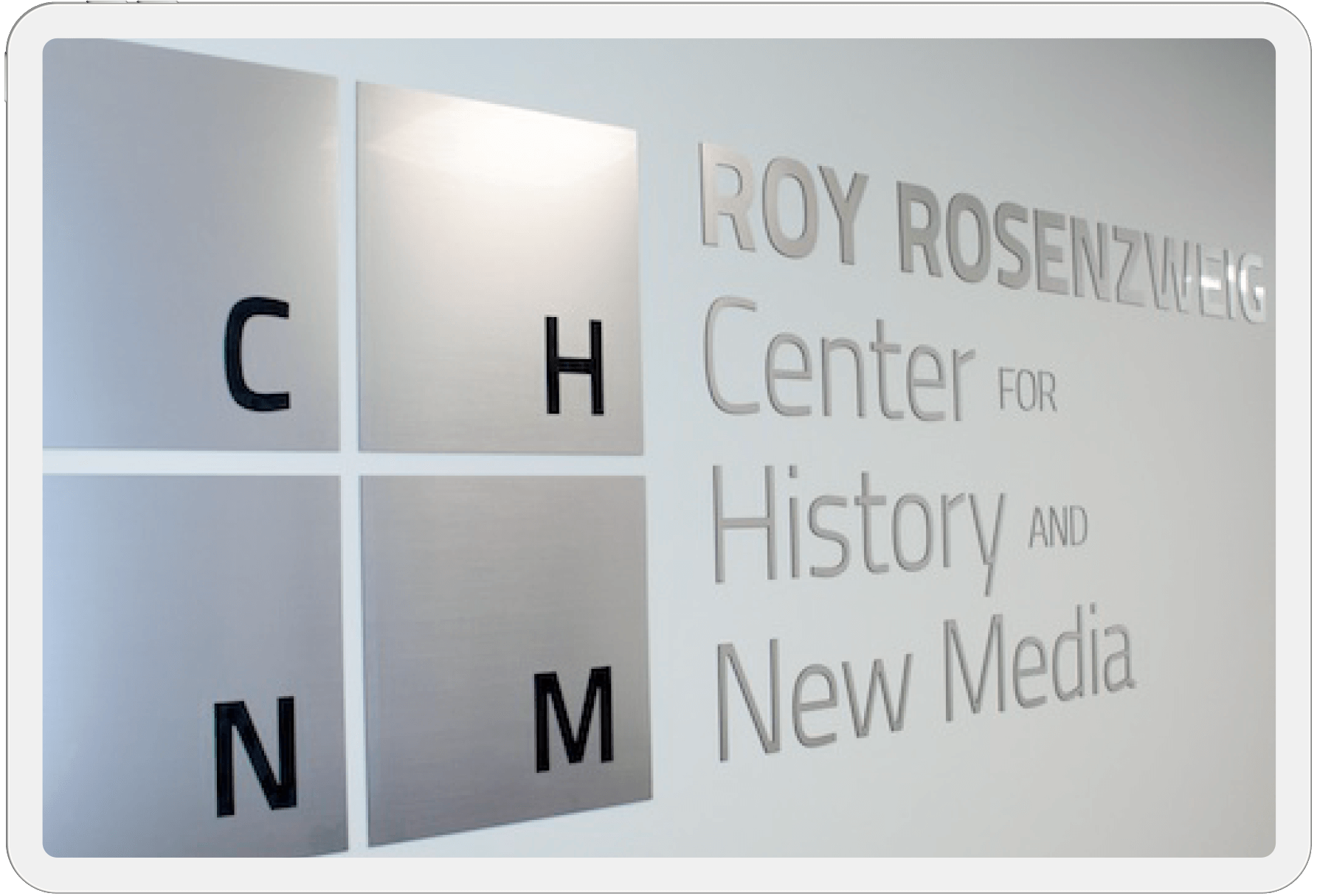
However, George Mason has an advantage over other universities because of its CHNM department which adds to the scholarship of teaching and learning through its digital media pursuits. CHNM offers teachers and professors multiple sources of learning tools, historical archives and databases that add to their teaching scholarship. At the same time, CHNM provides multiple resources for students that add to their learning experience through digital scholarship.
Obviously, these digital resources have many positive benefits; they are easily accessible, they are constantly growing, and they are more familiar to young college students who have grown up with new media.

Equally important for PhD students at GMU, the Clio requirement provides two semesters of working with digital technology as well as learning about what digital technology does offer, what it can offer, and why that is important to the scholarship of learning and teaching. And, as obvious through our class discussions and assignments, Clio is also an educational course for PhD students to gain digital scholarship in learning and in teaching. Even though I am still in the very early stages of technological ability, I am more positive about the future of teaching through digital technology because of the sites examined last week.

The Who Killed William Robinson site offers multiple primary sources for students to use to figure out who was the murderer. However, the students all argued, with evidence, for many different suspects. This excellent historical exercise in using evidence and reasoning argues that deciphering evidence is not easy nor is there a simple answer.

The travel sites on World History Matters were different because they provided very simple and clear exercises to teach students how to read one historical document and, then through reasoning skills, to answer specific questions about that document. Both sites are linked to a key point made by Pace, who discusses the need for students to learn the basic building blocks of historical investigation. Therefore, these sites provide tools for teachers to use to promote learning.

However, I also liked the World History Matters travel sites for their ability to provide short and concise primary source documents with similar descriptions of religious monuments but written by men of different faiths. For students taking Art History of the Islamic World, these documents show that Muslims and Christians shared many similar cultural and religious beliefs; this is a difficult concept to teach because many students disagree. However, this site offers an opportunity to teach these concepts with a different, more objective, approach that will provide better tools to learn about the intersection of cultures and religions. In this case, the students are provided with a different, or at least another, way to learn while, at the same time, I have learned a better way to teach.

Digital scholarship has a bumpy road ahead, just look at the Hitler Historical Museum site, but digital scholarship provides new and innovative ways to add to the scholarship of learning and teaching. Digital scholarship can also fulfill Pace's requirement that teachers must become more capable of providing students with the basic understanding of reasoning and objectivity in order to think historically.


Posted by mguignon at November 16, 2005 09:30 PM