home | schedule | students | requirements | blog |chnm
History 696: Schedule
Note: This schedule is only tentative. In an experimental course like this one, we need to be open to changes in schedule, format, and requirements. I may, for example, alter the specific assignments or their order based on the needs and interests of the class. I welcome your input in shaping the course so that it most effectively meets your needs. Because some changes may be made at the last minute, it is important that you check with a member of the class if you should be forced to miss a particular class for some unavoidable reason.
Weeks: 1, 2, 3, 4, 5, 6, 7, 8, 9, 10, 11, 12, 13, 14, 15

WEEK 1: 29 August: Digitizing the Past: Possibilities & Problems: Introduction, Requirements, and Themes

Over the next week, post to the class weblog. Elaborate a bit on your introduction to the class and feel free to say something about your expectations for the class, your research interests, or anything else you'd like to share with the group. Use some basic html code in your posting (bold, italics, a hyperlink) and comment on at least one posting by someone else in the class. Use the category that is your name.

Note that the blog has an introduction to blogging. To make your own entries, you need to log in, which you can do at http://chnm.gmu.edu/movabletype/mt.cgi . There is a link to that log in on the main blog page under "links."

September 5: Labor Day, No Class

For 6 September, write a diary about your Web History Scavenger Hunt (see website for details) in the blog that includes things like what you found, how you found it, what problems you encountered, how long it took you. Be sure to assign your posting to the category "Scavenger Hunt.”

For 6 September, write a diary (what you found, how you found it, what problems you encountered, how long it it took you) about your in your blog (put in category "Scavenger Hunt").

Searching Tips

WEEK 2: 12 September: WWW 101: Getting Yourself on the Web

Introduction to Dreamweaver and FTP by Allison Meyer O'Connor, IRC & History doctoral program

Preparation: Ideally, you should purchase or get access to Dreamweaver MX. You can purchase Dreamweaver for $99 (educational price) from Patriot Computers 993-4100) in the Johnson Center http://compstore.gmu.edu. If you don't own Dreamweaver yet, download a free 30-day trial version from: http://www.macromedia.com/software/dreamweaver/trial/. (You can buy the Dreamweaver suite for $198, which includes Fireworks, Freehand, and Flash.)

If you don't have an Internet file transfer program (e.g. WS_FTP or Fetch), download one (e.g., from http://download.cnet.com/) Make sure you bring the password for your Mason (osf1) account, which is not necessarily the same password as for your Netscape Mail account, if you have that. (This is only relevant if you are going to post your Web site on mason.gmu.edu. Some students already have Web hosting space that they will use.)

Dreamweaver is also available on all the machines in web*STAR , <http://media.gmu.edu/web/webstar.html>, 311 Johnson Center (993-3766) Hours: 10:00 am to 10:00 pm Mon-Thurs; 10:00 am to 6 pm Fri, Noon to 6 Sun. According to their site: "The web*STAR lab provides peer mentors, to provide guidance and problem solving, and the latest in hardware--and when possible, software--to facilitate Web development activities." This is an important resource for students who are just starting out on creating web pages.

Required:

1.Read and Try: Beginning HTML
http://www.irc.gmu.edu/resources/workshopmaterials/html/html1.html

You should be able to do all of the exercises in the materials.

2. Read: Managing Web Sites Using Templates and Cascading Style Sheets.
http://www.irc.gmu.edu/resources/workshopmaterials/website/css-design/index.html

This will be covered in class, but you should read through it to familiarize yourself with the idea of a template and the idea of a style sheet.

3. Have your web space set up before coming to class and bring your password.

a. If you are using your own web space through your ISP or web hosting service, you need to bring the host name as well as their user ID and password.

b. If you are using your Mason web space, you should have your account activated and the permissions set for your public_html folder.

http://www.irc.gmu.edu/resources/workshopmaterials/pageonmasonnew/pageonmasonnew.htm has some basic instructions on how to do this.

If you are not comfortable with computers, you should probably go to web STAR (Johnson Center 311) for assistance. If if you are not able to get set up by class time, then please bring some portable media (floppy disk, zip disk, or a USB drive) to the class and we will figure out how to get you set up later.

4. Read: Robin Williams and John Tollett, The Non-Designer's Web Book, 2nd edition, chapters 1-4 (unless you already know all this; you can do the quizzes at the end of the chapters to find out). (If you can’t get this in time for class, obviously you won’t be able to do this.)

Strongly Recommended:

Do some background reading on Dreamweaver, you can download Getting Started with Dreamweaver MX 2004 at: http://www.macromedia.com/support/documentation/en/dreamweaver/. You have to register to do this, but it's free.

Note: Last day to drop with no tuition liability and last day to add: September 13. If you are a new student, it is worth knowing that GMU does not make exceptions for this deadline unless you can prove, in writing, that the University somehow made a mistake with your registration.

WEEK 3: 19 September: Varieties of Digital History

Read: Roy Rosenzweig and Daniel Cohen, "Exploring the History Web" in Doing Digital History.

Vernon Takeshita, "Tangled Webs: The Limits of Historical Analysis on the Internet" : http://www.dartmouth.edu/~history/newsletter/spring01/web.html

Phil Agre, "Designing Genres for New Media: Social, Economic, and Political Contexts," http://dlis.gseis.ucla.edu/people/pagre/genre.html

Visit and Evaluate: Don't just quickly browse; spend a significant amount of time (enough time to look at everything or, if you can't look at everything--certainly the case at Valley of the Shadow--then spend at least two hours):

The Valley of the Shadow: Two Communities in the American Civil War: http://valley.vcdh.virginia.edu/

National Geographic: Remembering Pearl Harbor: http://plasma.nationalgeographic.com/pearlharbor/

Brainerd, Kansas: Time, Place, and Memory on the Web: http://www.rootinaround.com/brainerd/

Do History: http://www.dohistory.org/

One project of your choice from the Institute for Advanced Technology in the Humanities website: http://iath.virginia.edu

Write and post in the blog (use categories "website evaluation" and your name): An evaluation (500-1000 words) of one these four sites, using the Journal of American History evaluation guidelines http://chnm.gmu.edu/jah and, where relevant, drawing on some of the week's reading. Note especially the questions in the key areas of content, form, audience/use, and new media.

Write and post in the blog (use categories "review essay proposal" and your name) your proposal for the web review essay by 24 September.

Do at least a basic homepage for your website and email me the address by 19 September. Post a link to this page in the class blog using the categories “website” and your name.

Student web sites from prior classes (but note those classes did not use a blog):
Ray Clark
Sheila Brennan
Stephanie Hurter
Amanda Shuman

WEEK 4: 26 September: The Future of Historical Narrative?

Read: Janet Murray, The Future of Narrative in Cyberspace

George Landow, Hypertext: The Convergence of Contemporary Critical Theory and Technology. Amplified, updated version of Chapter One (1996). (just read "Hypertextual Derrida, Poststructuralist Nelson?"; "The Definition of Hypertext and Its History as a Concept:" and "Predictions." http://www.scholars.nus.edu.sg/landow/cpace/ht/jhup/contents.html

William Cronon, "A Place for Stories: Nature, History, and Narratives," Journal of American History, 78:4 (March, 1992), 1347-1376

Keith Jenkins, "Introduction: on being open about our closures," in Jenkins, ed., The Postmodern History Reader (1997), xerox.

Lev Manovich, "What is New Media," and "The Forms," pp. 18-61, 213-43 in The Language of New Media, xerox.

Write and post a blog Entry ("narrative" and your name) on the questions provided.

WEEK 5: 3 October: Web Site Design and Infrastructure

Reading:Williams and Tollett, chapters 5-15.

Cohen and Rosenzweig, Doing, Digital History, chapters 2, 4, and appendix.

Paula Petrik, "Top Ten Mistakes in Academic Web Design," History Computer Review, May 2000, http://chnm.gmu.edu/assets/historyessays/topten.html

Michael O'Malley, "Building Effective Course Sites: Some Thoughts on Design for Academic Work,"Inventio, Spring 2000, http://chnm.gmu.edu/assets/historyessays/building.html

Jacob Nielsen, Alertboxes:"Are Users Stupid?" at http://www.useit.com/alertbox/20010204.html; "End of Web Design" at http://www.useit.com/alertbox/20000723.html; "Why Web Users Scan Instead of Read" at http://www.useit.com/alertbox/whyscanning.html

Larry Gales, "Web Page Design Inspired by Edward Tufte" http://staff.washington.edu/larryg/Classes/Rinflux/zz-influx.html

Glossary (do you know these terms?)

An XML history document.

Post on your blog (under "design" and your name): Links to two history websites, one that you regard as well designed or structured and one your regard as poorly designed or structured. You should not choose sites that are praised or criticized in the reading. Write at least one paragraph on why you have chosen them. On your website, illustrate an example of good or bad design drawn from the sites.

WEEK 6: 11 October: Reports from the Field
Note: Class meets on Tuesday because of Columbus Day.

Write, Post (on your website rather than blog), Present: Web Review Essay: Note that your presentation should be five minutes long with five minutes for discussion. Five minutes is almost no time at all--think of this as a sort of "review slam" that requires you to say the most important things in the clearest, most concise way. Be sure to post a link to this essay in the class blog.

WEEK 7: 17 October: Photoshop for Historians

Guest: Stephanie Hurter

Get: Photoshop Elements, available from Computer Store at Educational Price of ca. $59 or Photoshop 7.0.

WEEK 8: 24 October: The Challenge of Digital Scholarship

Read: "Forum on Hypertext Scholarship: AQ as Web-Zine: Responses to AQ's Experimental Online Issue," American Quarterly (June 1999), commentaries by Roy Rosenzweig, James Castonguay, Thomas Thurston, M. David Westbrook, Louise Krasniewicz and Michael Blitz, Susan Smulyan, Christopher P Wilson, and Randall Bass, all available online through Project Muse. (You can access Muse at http://ers2000.gmu.edu/sql/alpha.php.)

David Staley, Computers, Visualization, and History, introduction and chapter 4, xerox.

Closely read at least two examples of digital scholarship from this list of five (I will ask you for your choices a week in advance so that we can have a spread of people choosing different examples):

Will Thomas and Edward Ayers, "The Difference Slavery Made: A Close Analysis of Two American Communities," http://www.vcdh.virginia.edu/AHR/
You should also read the "overview" on the AHR site, which you need to access through the GMU library portal going to the History Cooperative and then to the address: http://www.historycooperative.org/journals/ahr/108.5/thomas.html

"Dreaming Arnold Schwarzenegger" by Louise Krasniewicz and Michael Blitz

"Hearsay of the Sun: Photography, Identity, and the Law of Evidence in Nineteenth-Century American Courts" by Thomas Thurston

"From Hogan's Alley to Coconino County: Three Narratives of the Early Comic Strip" by David Westbrook

All three of the above are available at: http://chnm.gmu.edu/aq/

Lynn Hunt, Jack Censer, "Images of the French Revolution" at http://chnm.gmu.edu/revolution/imaging/home.html Username is "imaging" and password is "revolution."

Two other examples of interest:
Charles Hardy III & Allesandro Portelli, "I Can Almost See the Lights of Home ~ A Field Trip to Harlan County, Kentucky,"Journal of Multimedia History 2(1999) <http://www.albany.edu/jmmh/>

Philip J. Ethington, “Los Angeles and the Problem of Urban Historical Knowledge” American Historical Review (December 2000) <http://cwis.usc.edu/dept/LAS/history/historylab/LAPUHK/index.html>


Write and Post on the blog ("digital scholarship" and your name): journal entry on whether the two examples of digital scholarship you examined fulfilled the "promise of digital scholarship." Do they do anything genuinely new with new media? Do they do it well?

Write and Post on the blog ("digital project proposal" and your name): Proposal for Digital Project Proposal by October 29. (See Guidelines)

Week 9: 31 October: Individual Meetings to Discuss Projects

No regular class; individual meetings will be scheduled.

WEEK 10: 7 November: Archives and the Futures of Research and Scholarship

Read: Cohen and Rosenzweig, Doing Digital History, chapters 3, 7, and 8 (digitization, copyright, and preservation). Chapter 8 is optional.

Roy Rosenzweig, "Scarcity or Abundance? Preserving the Past in a Digital Era," American Historical Review, June 2003, http://chnm.gmu.edu/assets/historyessays/scarcity.html

John Willinsky, "Copyright," forthcoming chapter from Rights and Vanities: The Case for Open Access to Research and Scholarship (Cambridge, MA: MIT), available for download here.

Lawrence Lessig, Free Culture, chapter ten ("property"), which is available for free download at http://free-culture.org/freecontent/

Choose an online archive (see list for suggestions) and review it carefully. Post on blog ("archives/research") an idea for a historical research and writing project based on that archive that could not be carried out--or at least not carried out easily--with a print-based archive. Comment briefly on the structure, interface, search, and presentation of sources. Is this a well-structured and user-friendly archive? Comment also on any digital tools (for search and discovery or analysis and organization or presentation and display) that would make it easier for you to complete that research and writing project. The project doesn't need to be based exclusively on the online resources but they should be a central feature. The goal of the exercise and the reading for this week is to think about whether (and, if so, how) research and writing will be different in the digital era.

WEEK 11: 14 November: The New Media Classroom

Read: David Pace, "The Amateur in the Operating Room: History and the Scholarship of Teaching," American Historical Review, October 2004.

T. Mills Kelly, "For Better or Worse? The Marriage of Web and the History Classroom," Journal of the American Association for History and Computing, III/2, August 2000 <http://mcel.pacificu.edu/JAHC/JAHCIII2/ARTICLES/kelly/kelly.html>.

And look at the following two web sites:Who Killed William Robinson? <http://web.uvic.ca/history-robinson/> Think about the different ways that the evidence in this site can be organized to arrive at different conclusions and how that feature of the site might be useful for teaching historical thinking. Also, answer the following question: Who killed William Robinson? After you have studied it yourself, look at undergraduate student responses to the site at:

http://chnm.gmu.edu/history/faculty/kelly/blogs/h100mt4/archives/cat_investigations.html

World History Matters: Try the several of the following exercises:

http://chnm.gmu.edu/whm/unpacking/mapsq1.php
http://chnm.gmu.edu/whm/unpacking/mapsq2ex.html
http://chnm.gmu.edu/whm/unpacking/mapsq3.php
http://chnm.gmu.edu/whm/unpacking/travelq1.php
http://chnm.gmu.edu/whm/unpacking/travelq2.php
http://chnm.gmu.edu/whm/unpacking/travelq4.html
http://chnm.gmu.edu/whm/unpacking/acctsq2.php

Women in World History: Examine at least two of the curriculum modules at:
http://chnm.gmu.edu/wwh/wwhlessons.html

Look also at the Webography Project (http://chnm.gmu.edu/webography). For this class, the username is clio and the password is wired.

After our discussion in class, write and post in the blog (“digital classroom” and your name) your analysis of how you think digital media have and may change the teaching and learning of history.

Week 12: 21 November: Popular and Public History Online

Visit and closely examine the following sites (tentative list, subject to change):

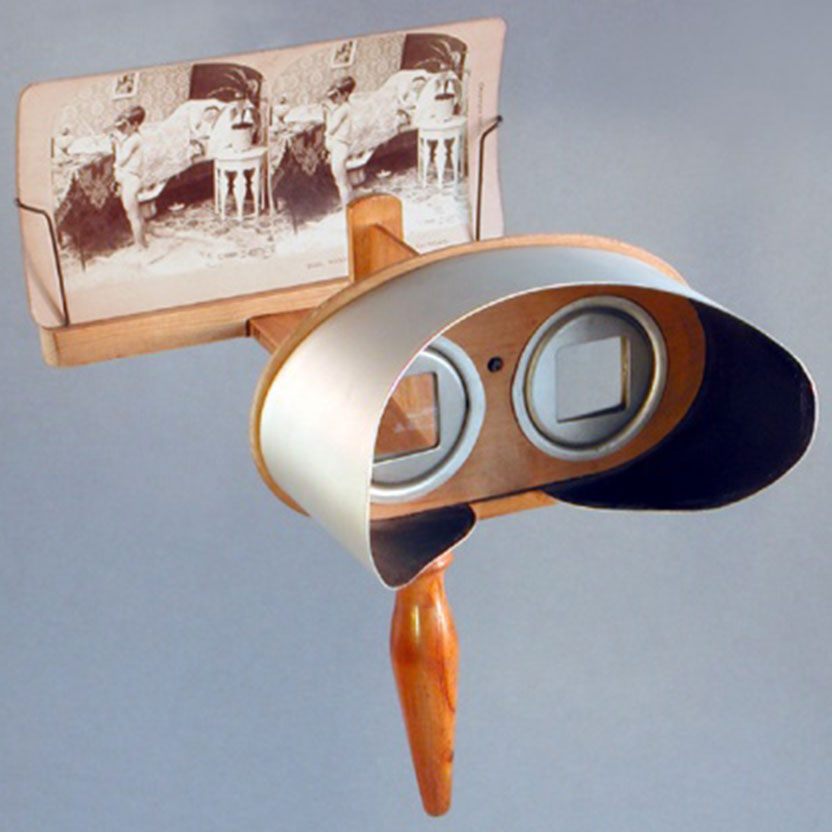
Devices of Wonder: From the World in a Box to Images on a Screen http://www.getty.edu/art/exhibitions/devices/choice.html

HistoryWired: A Few of Our Favorite Things http://historywired.si.edu/index.html

The History Channel <http://www.historychannel.com/> This is obviously too extensive to examine in full, but spend enough time to get a full sense of the site.

Bon Appetit! Julia Child's Kitchen
http://www.americanhistory.si.edu/juliachild/default.asp

Website: Raid on Deerfield: The Many Stories of 1704 (www.1704.deerfield.history.museum )

Steve Dietz, “Telling Stories: Procedural Authorship and Extracting Meaning from Museum Databases” http://www.archimuse.com/mw99/papers/dietz/dietz.html

John Vergo, “"Less Clicking, More Watching": Results from the User-Centered Design of aMulti-Institutional Web Site for Art and Culture” ( delivered at the MW 2001, ), <http://www.archimuse.com/mw2001/papers/vergo/vergo.html>

Write and Post: Blog entry ("public history") on one of the following questions:

1. Which of these sites most effectively conveys the past to a "general" audience? (And why?)

2. Which of these sites makes the most effective use of new media? (And how?)

3. Which of these sites has a design and interface that most effectively communicates its message and serves its audience?

4. Which of these sites has an interpretation of the past that either: a. best reflects current scholarship or b. challenges its audiences?   

Week 13: 28 November: The Future of Historical Communities

Read:Barry Wellman and Milena Guila, "Virtual Communities as Communities: Net Surfers Don't Ride Alone," in Marc Smith and Peter Kollock, eds., Communities in Cyberspace (1999), xerox.

Pew Internet Project, "Online Communities: Networks that nurture long-distance relationships and local ties" (October 2001), at http://www.pewinternet.org/reports/toc.asp?Report=47

Read: Cohen and Rosenzweig, Doing Digital History, chapter 5 (audience).

Write and submit to the Wikipedia ( http://en.wikipedia.org ) an original entry for a topic that interests you but that is not yet dealt with in the Wikipedia. Then write and post in the blog ("wiki" and your name) a discussion of why you chose the entry you chose, how writing it for the Wikipedia was difficult or easy, which other topics you linked it to, and what responses you received.

For the week, observe and post a blog commentary ("community" and your name) on an online historical community (See guidelines).

Week 14: 5 December: Proposing the Future of the Past

Student Projects Proposals presented:

Week 15: 12 December: Proposing the Future of the Past

Student Projects Proposals presented.

Due: Project Proposals on your website rather than blog. Post a link to your final project on the blog under "final project" and your name.

Version history:
v. 1.0 created August 25, 2005

home | schedule | students | requirements | blog |chnm